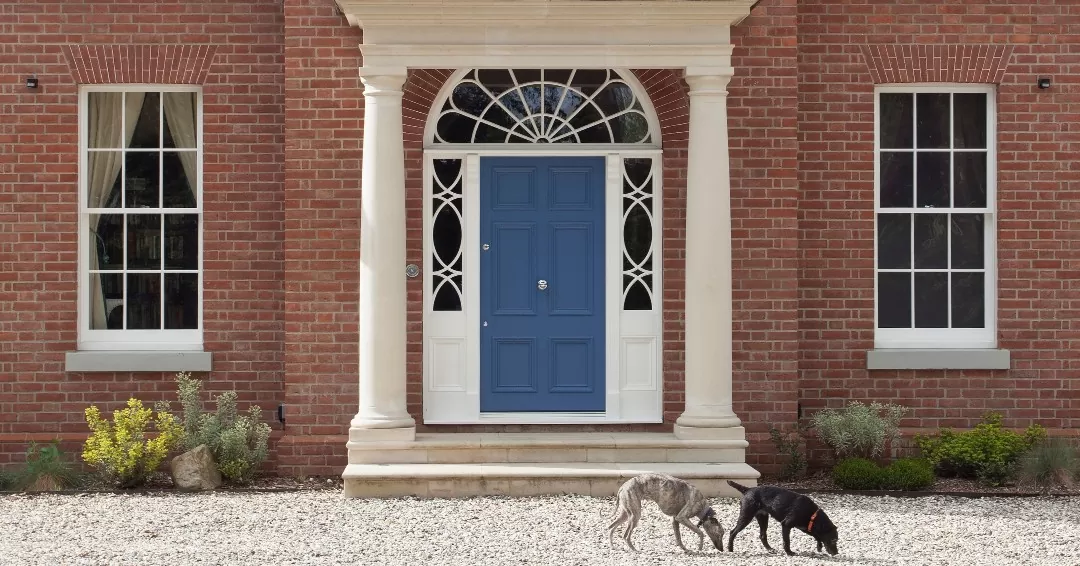
External wooden doors
Durable wood doors that exceed all expectationsExternal wood doors protect your home from the elements, so choosing one that’s built to last is essential. Accoya wood doors are designed for lasting performance, delivering exceptional strength and resilience compared to traditional timber. They also offer excellent thermal insulation and superior stability, meaning less shrinking, swelling, and maintenance over time.

Long lasting
Solid wood doors with long lasting performance – giving you the beauty of wood combined with peace of mind for your property.

Dimensionally stable
Highly stable so harsh environments will not impact installation ensuring that your door’s performance stays true and coatings last longer.

Natural wood
Accoya is real wood, but its excellent stability and durability outperforms even traditional hardwood front doors, such as oak.

Low maintenance
With 3-4 times less swelling than traditonal wood species, Accoya’s minimal movement keeps projects looking great saving time and money in the long run.
Accoya wood door performance
Accoya high performance wooden doors out-perform traditional hardwoods and in many cases, PVC and aluminium.
Scroll left-right to view table
| Key benefit | Accoya | Sapele | Oak | Meranti | Iroko | Redwood |
|---|---|---|---|---|---|---|
| Lifespan | ✓✓✓ | ✓(✓) | ✓(✓) | ✓(✓) | ✓✓ | ✓ |
| Warranty | ✓✓✓ | N/A | N/A | N/A | N/A | N/A |
| Coatings performance | ✓✓✓ | ✓✓ | ✓ | ✓ | ✓ | ✓ |
| Thermally insulating | ✓✓ | ✓ | ✓ | ✓ | ✓ | ✓✓ |
| Maintenance intervals | ✓✓✓ | ✓✓ | ✓ | ✓ | ✓ | ✓ |
Table shows comparison between properties of Accoya wood and other wood species.
Wooden door styles
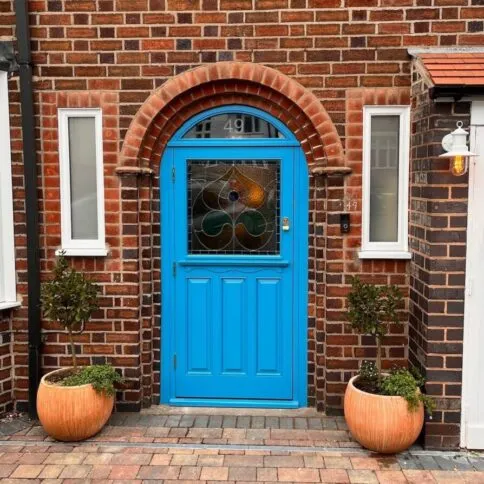
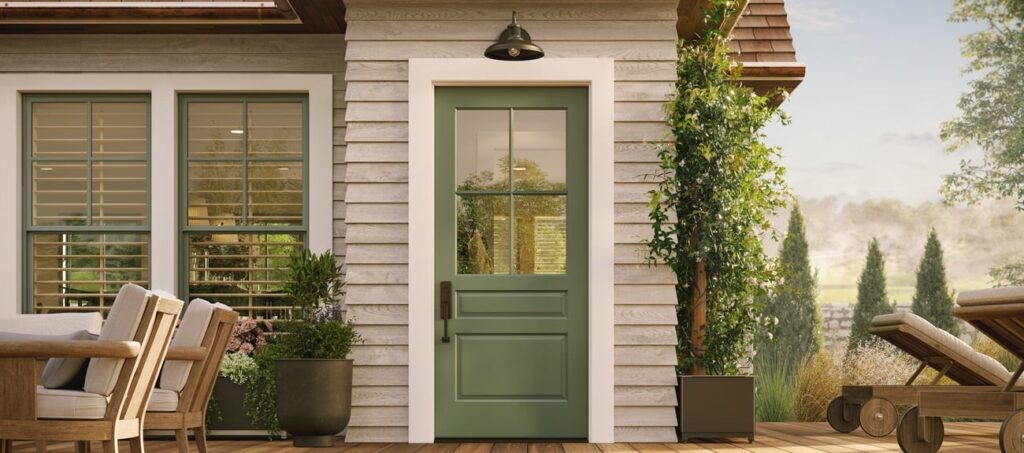
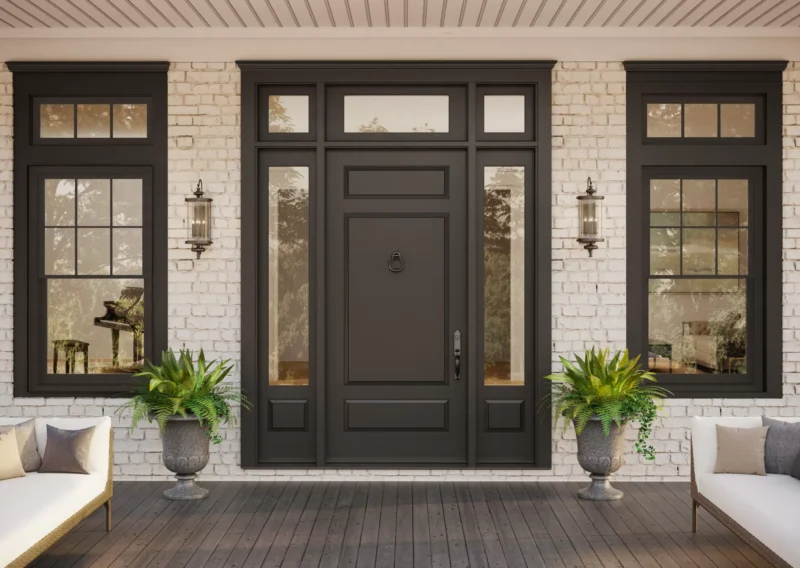
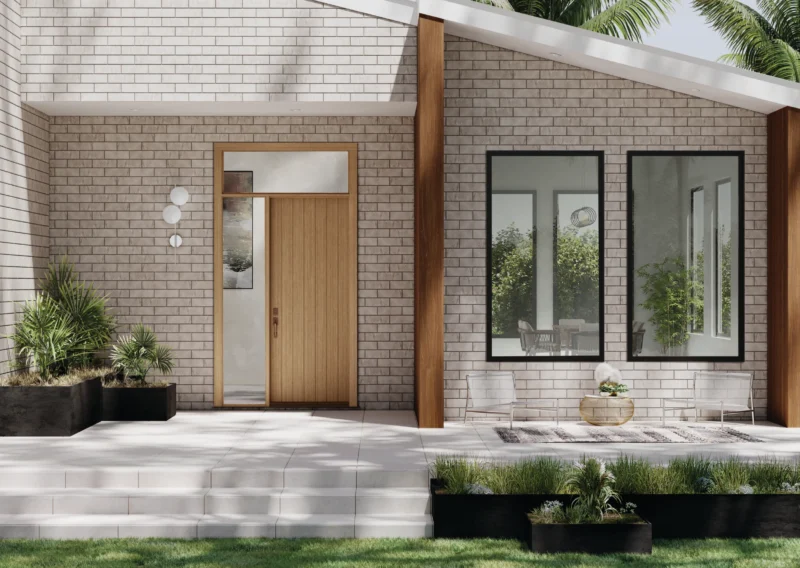
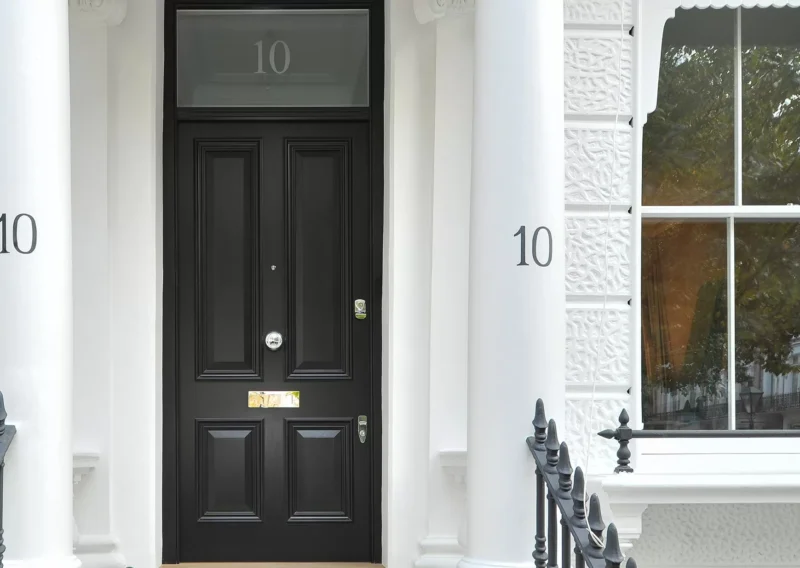
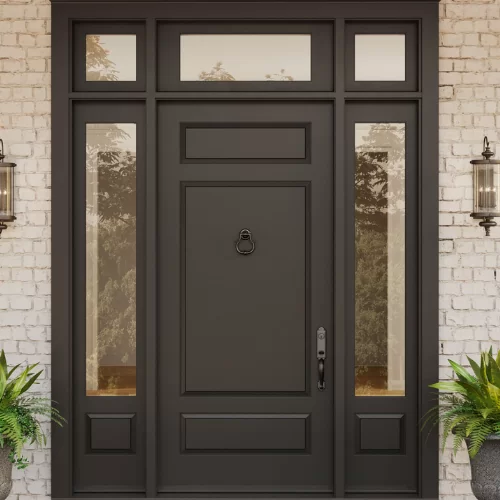
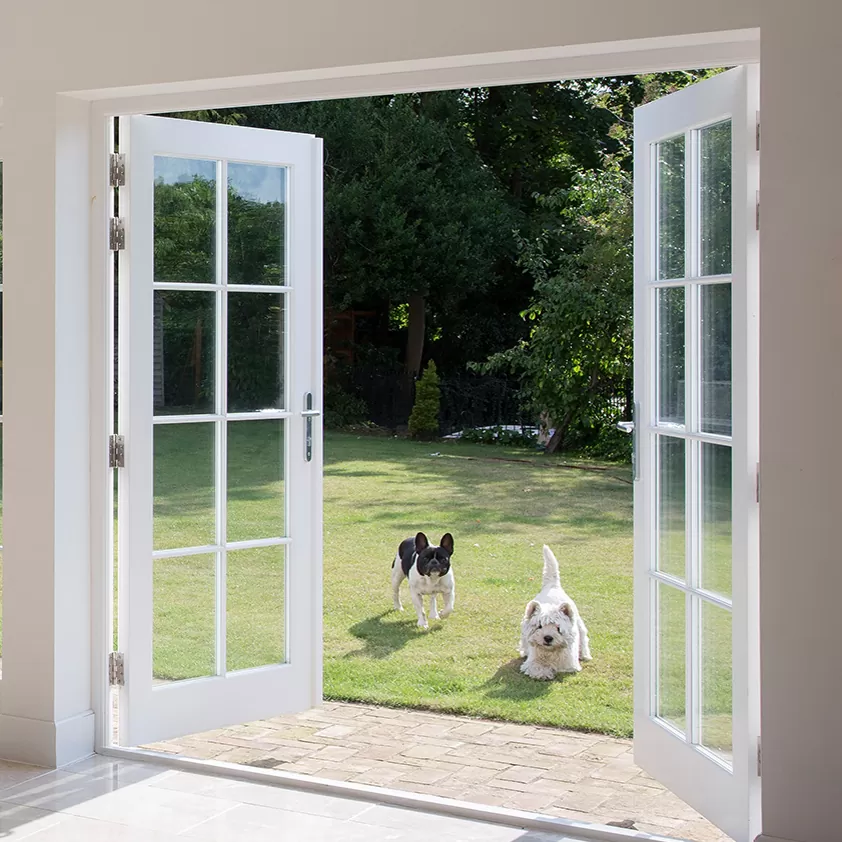
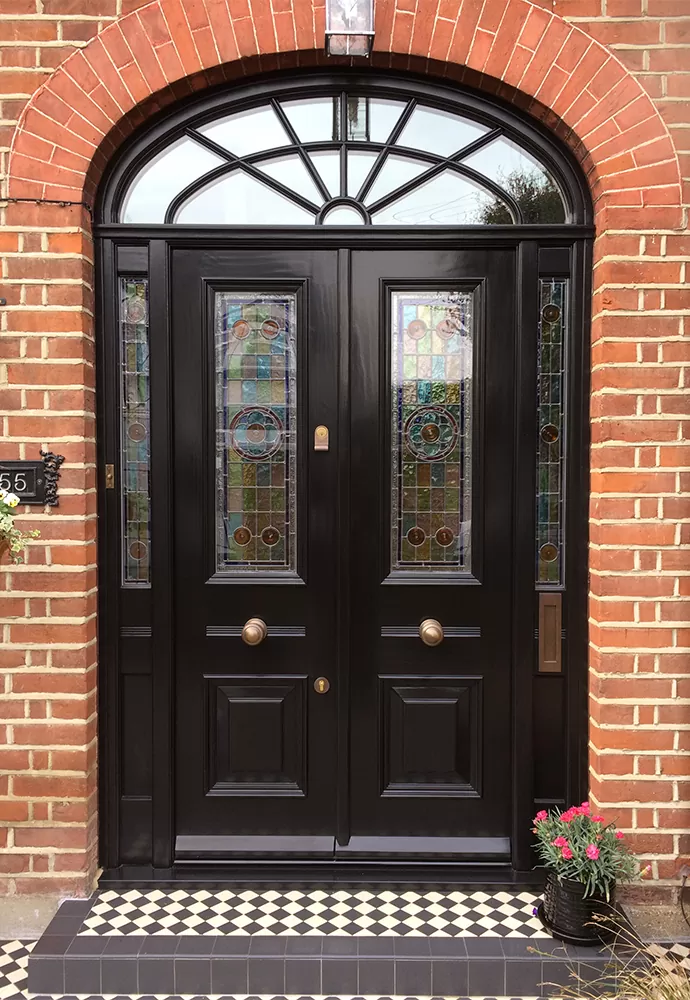
Accoya wood is very easy to work with and can be manufactured into many different door styles to suit any home.

Tested to the limit
60 year service life
After running tests and reviewing external and independent data, the BRE concluded that Accoya wood, provided best design practice is followed, has a service life expectancy of 60 years when used in exterior applications such as wooden front doors and wooden door frames.
Part Q compliancy
To enable building regulation Part Q compliancy, Accsys in collaboration with UKAS approved test houses of timber window and wooden door manufacturers, ancillary suppliers to our industry and the BWF Federation has developed a security global assessment. This document allows for the successful security testing of Accoya windows and doors to be cascaded down to window and door manufacturers, thus limiting the need for further testing.
Thermal Performance
Accoya thermal conductivity has been assessed by IFT Rossenheim, Germany in accordance with EN 12664 and then developed into the required declared value format, under the most rigorous European assessment methods by the EN ISO 10456: 2008 procedure for determination of declared and design thermal values.
In comparison to other standard wood types for joinery, Accoya thermal conductivity is:
› Superior to softwood by 8%
› Superior to hardwood by 30%
Please see more information in our download section.
Coatings & Finishes
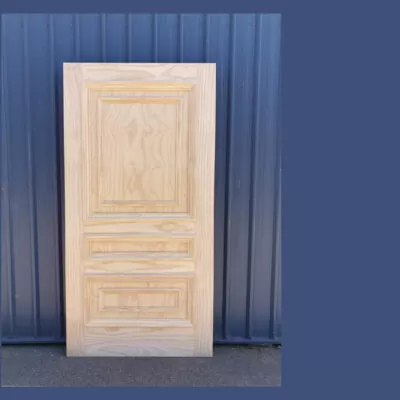
A fully factory coating is strongly recommended for Accoya wooden doors. A variety of colors and finishes have been tested by leading coating manufacturers with outstanding results. Some examples can be seen below but the possibilities are endless.



Case Study
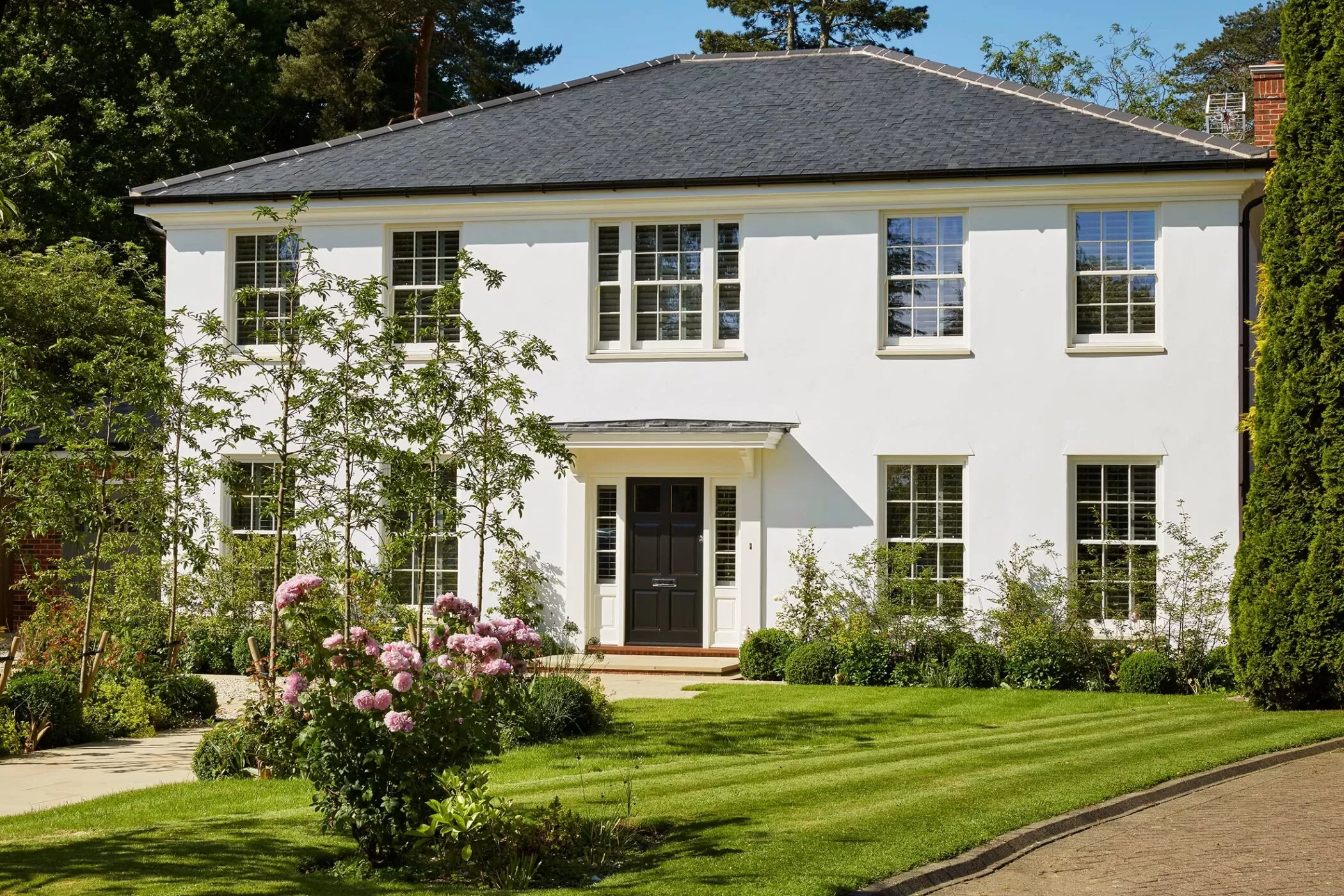
Georgian design into 21st Century
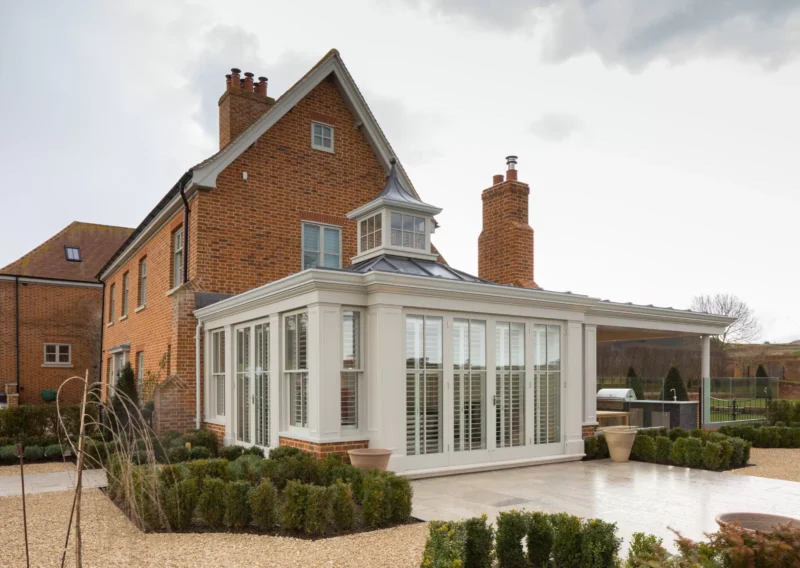
Accoya, the world-leading high performance sustainable wood was selected by expert bespoke joinery company, Westbury Windows & Joinery for a recent renovation project. Accoya was chosen to create ‘Legacy’ sliding sash windows
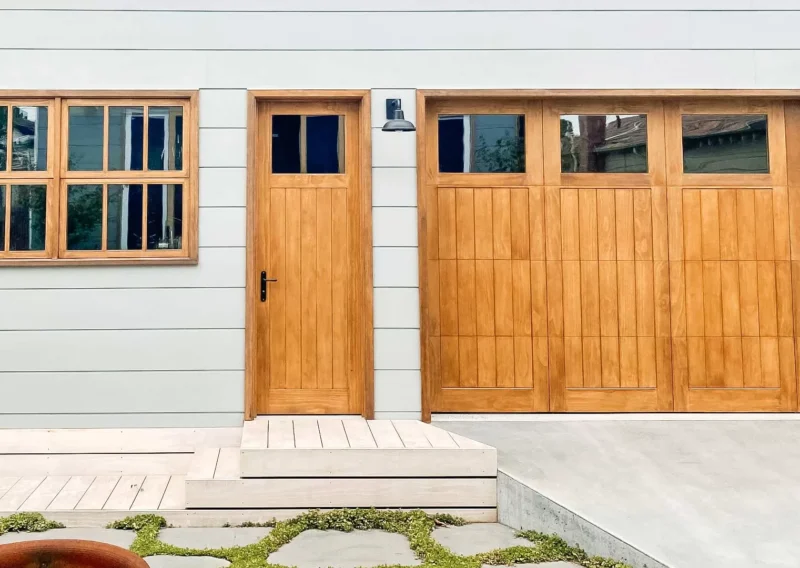
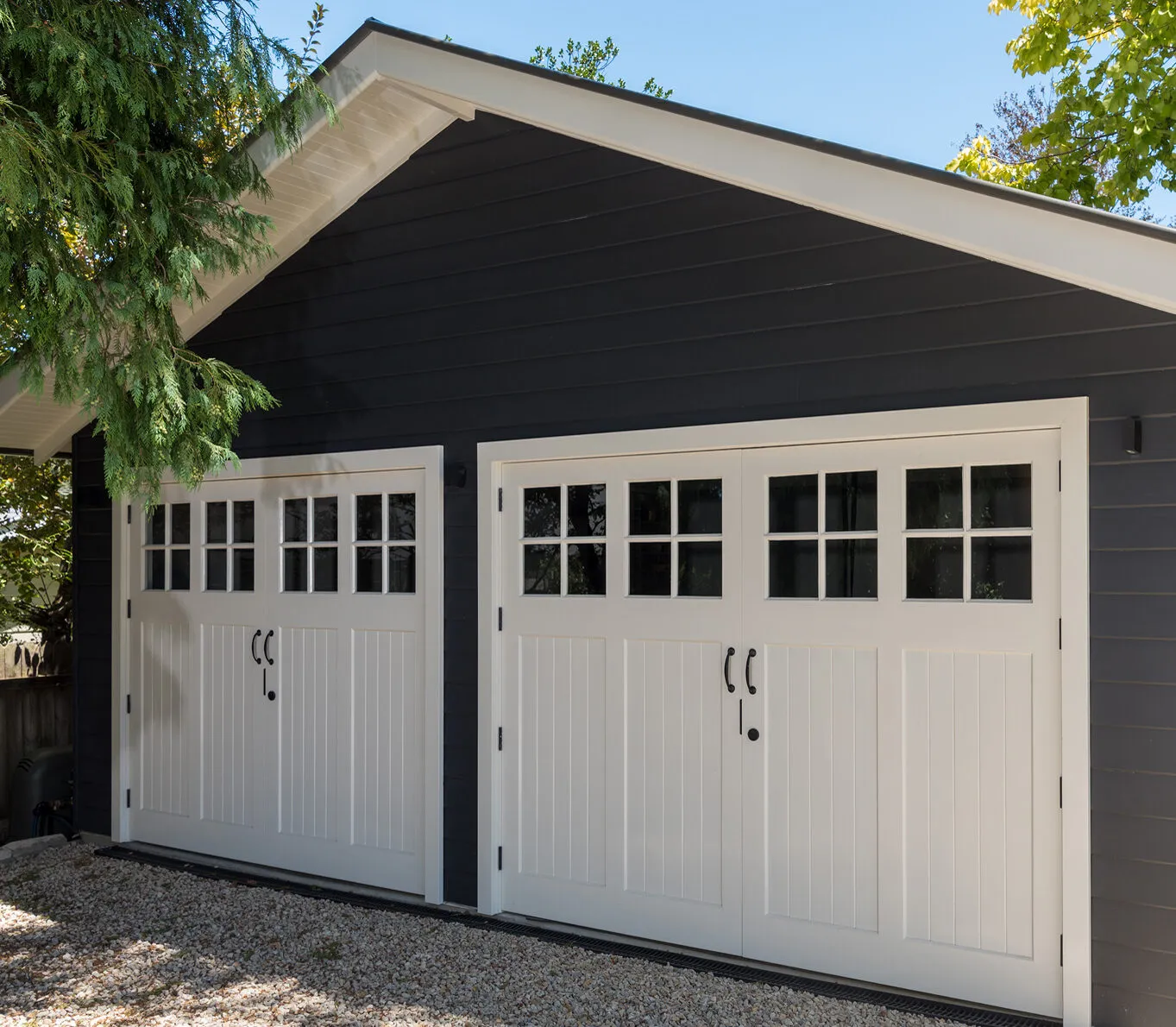
In addition to the windows, Accoya wood was used for the six-panel entrance door, and also featured in the traditional ‘open-out’ style garage doors which were part glazed, part panelled. Due to its superior dimensional stability, coatings such as the Moss Grey finish applied to the Accoya panels on the garage doors, last twice as long, again offering home-owners a long-term, low maintenance solution without compromising quality.

Accoya door FAQs
-
Thanks to the advanced acetylation process that makes Accoya highly resistant to rot, decay, and weathering, Accoya wooden doors are engineered to last over 50 years. This durability far exceeds conventional softwood and hardwood doors and is backed by Accoya’s 50-year above ground guarantee.
-
Accoya doors offer exceptional dimensional stability, strength, and resilience against the elements. The acetylation process reduces the risk of swelling, warping, or cracking, ensuring doors maintain their integrity with minimal upkeep, and provide top-tier thermal insulation and energy efficiency for your home.
-
Yes, Accoya wood is sustainably sourced and undergoes an acetylation process that does not add harmful chemicals. It is 100% recyclable, renewable, and certified by FSC®, making it one of the most eco-friendly timber solutions for cladding.
-
Accoya’s stability dramatically reduces the need for regular maintenance, repainting, or sealing compared to traditional timber doors. Its robust structure resists cracking and fading, so maintenance is simple. Periodic cleaning and occasional recoating will keep your Accoya wooden doors looking pristine year after year.
-
Absolutely. Accoya’s enhanced moisture resistance and stability allows your wooden doors to endure harsh weather conditions, including heavy rain, high humidity, and salty coastal air, without deteriorating or losing structural integrity. This makes Accoya an excellent choice for exterior doors across all environments.
-
Accoya wooden doors outperform oak and other traditional timbers on durability, stability, and environmental impact. Unlike oak, which can swell or crack, Accoya remains stable and retains its performance and appearance for decades.
Oak also requires regular maintenance, including frequent sealing or staining to protect against moisture and UV damage. Accoya’s advanced acetylation process makes it highly resistant to rot, decay, and adverse weather conditions, requiring minimal maintenance and retaining its finish far longer.
-
Accoya wood is made from radiata pine trees. These are sourced and taken to our production facilities in the Netherlands where they undergo a modification process, more specifically known as Acetylation. This process turns the radiata pine wood into the world's most stable wood, Accoya.
More information about the Acetylation process can be found here.