
Natural playground equipment: What to consider for sustainable playground design
Playground design has come a long way in the past decade in terms of sustainability. Natural playground equipment and landscapes are becoming more inspiring for children and kinder to our environment. But what are the best playground materials and what does it take to succeed in designing sustainable outdoor play spaces?
09.23.2025
What is natural playground design?
Natural playground design is the design and creation of highly sustainable natural play structures which have a much lower impact on the environment. Using natural materials, including wood, plants, boulders, sand and earth, natural playground design enables children to enjoy imaginative, organic and sensory-rich play experiences.
The human benefits of a natural playground
Sustainable natural playground design creates fun, functional and eco-friendly environments that actively stimulate creativity and open-ended play in children of all ages. Natural play equipment invites children to connect and interact with nature. It helps support their physical and social development through climbing, balancing, building and exploring with others. Sustainable playgrounds can also serve as educational tools; integrating elements that teach children about nature, ecology, and environmental responsibility. These inspiring spaces are civil assets that contribute to healthier and more vibrant communities.
Child-friendly natural playground equipment and landscapes
Throughout this natural playground equipment blog, we will highlight four examples of sustainable natural playground design projects and equipment incorporating Accoya wood.

Earthscape, Downsview Park, Toronto, Canada
Earthscape used Accoya on the majority of their custom playground structures for decking and siding at Downsview Park – a sustainable playground design inspired by a nearby airport. One of the natural play structures is based on an airplane and there is also an Accoya air traffic control tower, both of which are climbable.
The challenges of designing a natural playground
The best playground materials for a natural playground are those that can deliver high-performance durability with minimal impact on the environment. They need to be cost-effective, aesthetically pleasing and be able to withstand the elements. Not only do they have to be sustainable, they have to be capable of enduring sustained heavy use by boisterous children. Natural playground equipment has to do all this without compromising once on the safety of children and parents.
Identifying and sourcing the best playground materials
Standing by the core principles of sustainable playground design, the most obvious choice of material for creating natural play structures and landscapes is wood. From a design perspective, wood is natural, plentiful, highly sustainable, incredibly flexible, easy to work with and opens up almost unlimited playground design possibilities. There are numerous timber types available, but one stands head and shoulders above the others in terms of sustainability, durability, dimensional stability and longevity… Accoya wood.

Holzpur, Rosenfeld Park, Basel, Switzerland
Holzpur designed and built a quirky urban natural playground that features a series of innovative climbing eggs. Featuring high-performance Accoya wood, distinctive wooden eggs encourage children to develop their climbing skills and develop their imagination and creativity. Accoya natural playground equipment provides a durable and safe environment for children to play.
Advantage Accoya
Let’s look at the different types of construction timbers and examine their pros and cons.
Softwood is plentiful, relatively inexpensive and is easy to work with, however, as its name implies, it is not very durable and is susceptible to warping, splitting, splintering, rotting and insect damage. Softwood is fast growing and can be sourced from FCA-certified forests, but its short lifespan does not make it the most sustainable choice as it needs replacing sooner than you would expect.
Hardwood is usually sourced from tropical rainforests. Deforestation is a major environmental concern and some species of tropical hardwoods can take over 100 years to grow to maturity from replanting. This does not make it a sustainable choice, however, hardwoods are more durable than softwoods and have longer lifespans, meaning any playground structures or landscapes built with hardwood will last considerably longer compared to softwoods.
Accoya wood is a sustainably sourced softwood that has been modified using a proprietary non-toxic process called acetylation. This changes the wood at a molecular level to make the softwood outperform most hardwoods. Acetylation vastly improves the dimensional stability and durability of the wood, making it highly resistant to weather and water ingress to prevent rotting, warping, cracking and splintering. It also makes Accoya more resistant to damage by insects such as termites. 100% biodegradable it comes with the guarantee of longevity in the form of long warranties, and Accoya is undoubtedly one of the best playground materials for innovative, sustainable playground design.
Innovative sustainable playground design
In summary, Accoya wood has been used extensively worldwide by eco-conscious playground design experts who want their creations to last for generations. They are excited by the design possibilities this high-performance wood facilitates for natural landscapes. It enables them to devise imaginative natural play structures and environments that are both highly functional, interactive and distinctly sculptural.
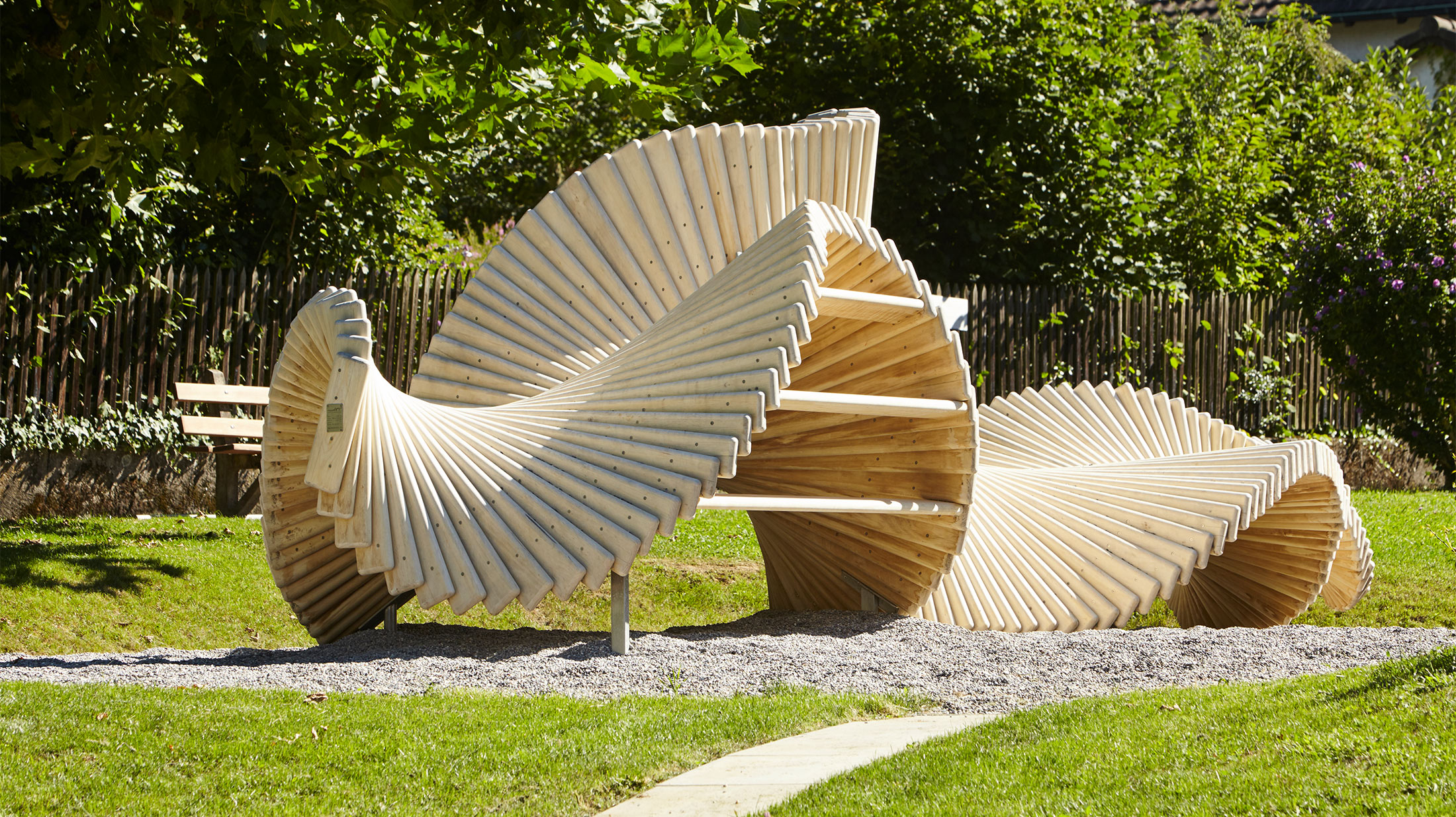
MoveArt, DNA inspired structures
MoveArt founder Norbert Roztocki designed these spatial forms from Accoya wood inspired by the double helix of the DNA structure for their range of natural playground equipment. Robust, low-maintenance and highly resistant against vandalism, these elegant and tactile natural play structures encourage sitting, lying, balancing, climbing, sliding and swinging.
You are currently on the Accoya site
Would you like to visit the Accoya Site to view all relevant content for your location?