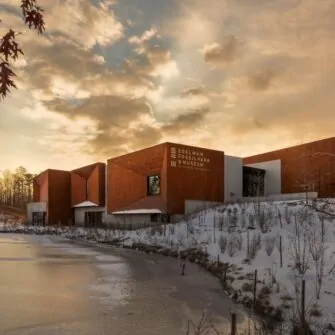
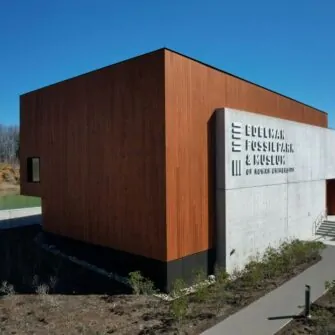
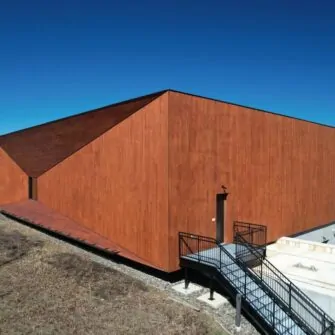


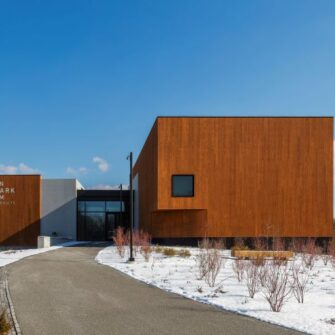
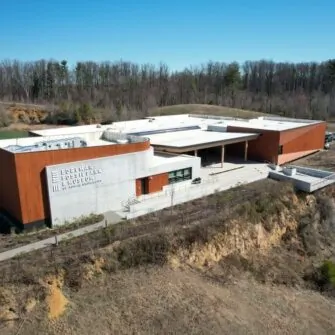


The Edelman Fossil Park & Museum at Rowan University is more than a place to explore prehistoric discoveries—it is a living example of how thoughtful design and material choice can shape a sustainable future. At 44,000 square feet, the museum is the largest net-zero carbon building in New Jersey, and sustainability was at the core of every design and construction decision. One of the most pivotal choices was the specification of Accoya® wood for the building’s façade.
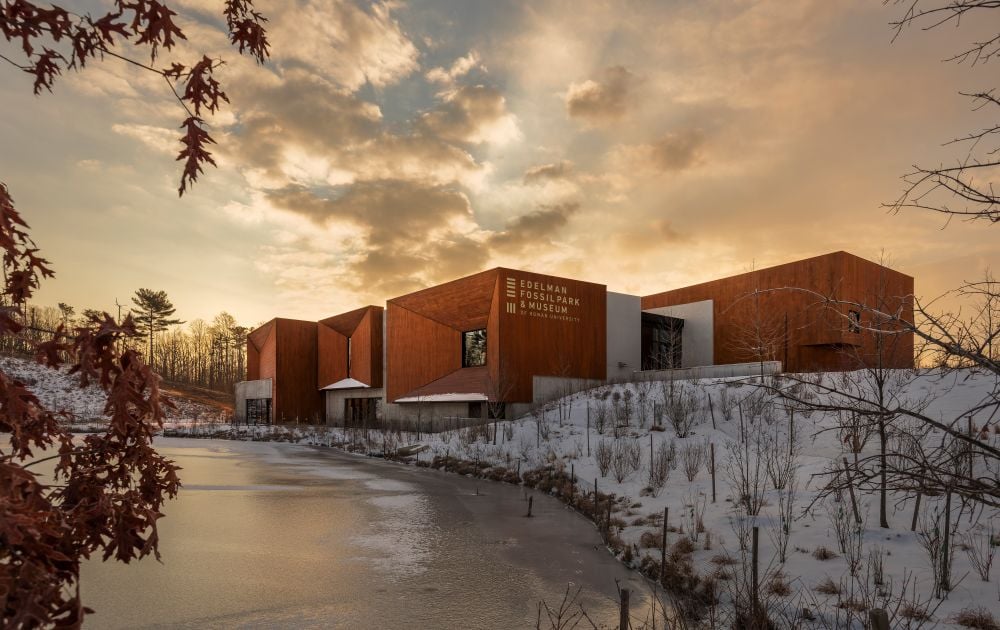
Edelman Fossil Park
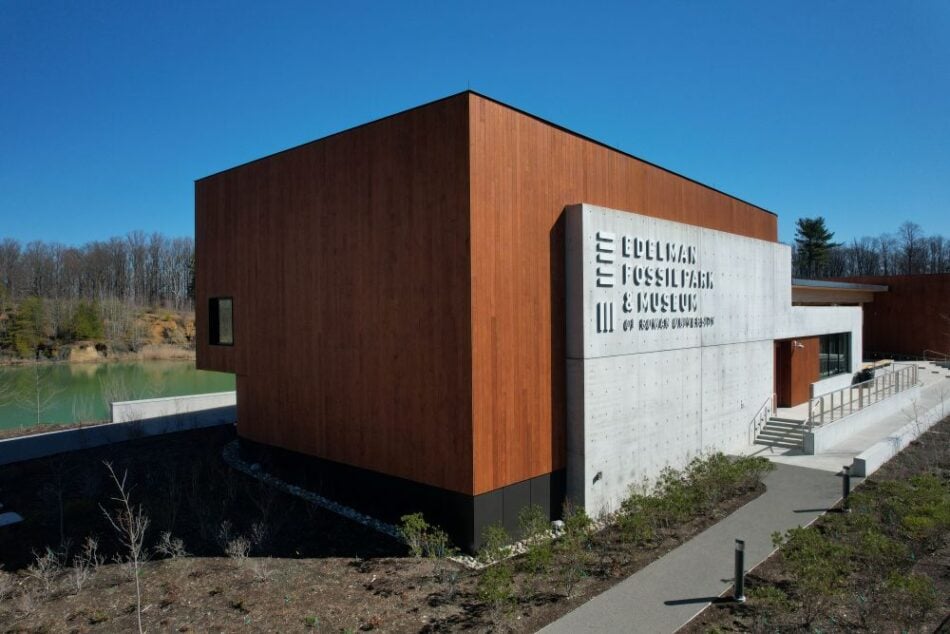
Discovering the Past While Building a Sustainable Future at Edelman Fossil Park & Museum
The Edelman Fossil Park & Museum at Rowan University is more than a place to explore prehistoric discoveries—it is a living example of how thoughtful design and material choice can shape a sustainable future. At 44,000 square feet, the museum is the largest net-zero carbon building in New Jersey, and sustainability was at the core of every design and construction decision. One of the most pivotal choices was the specification of Accoya® wood for the building’s façade.
Accoya vs. Cedar: No Contest!
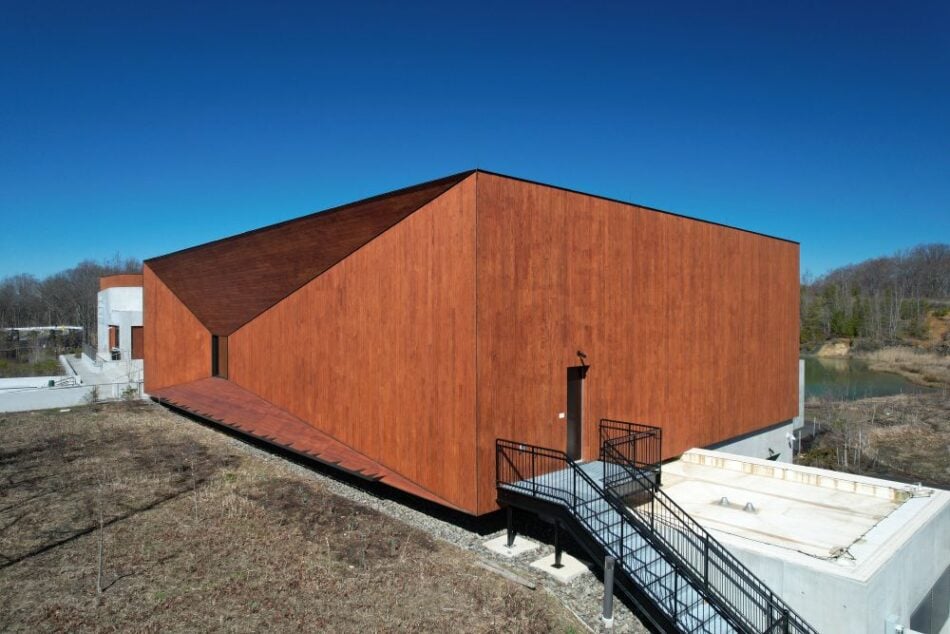
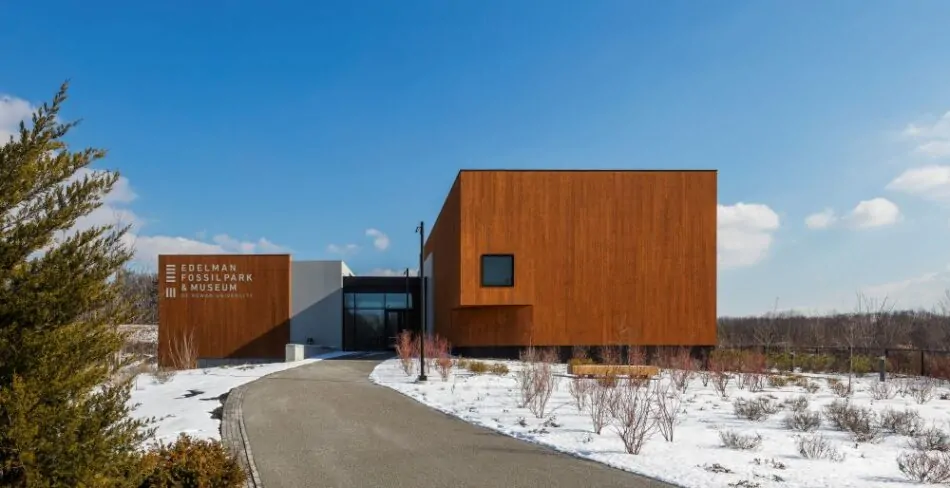
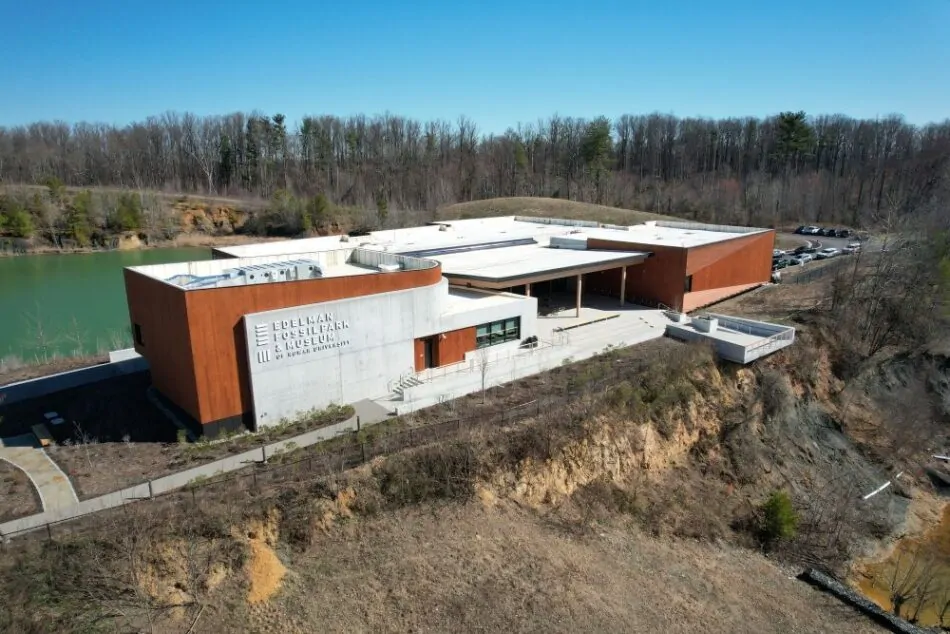
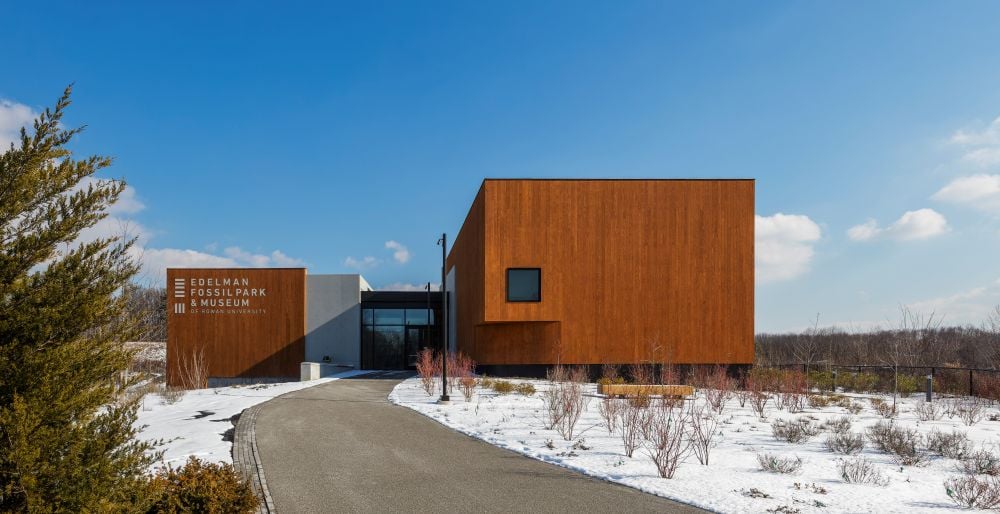
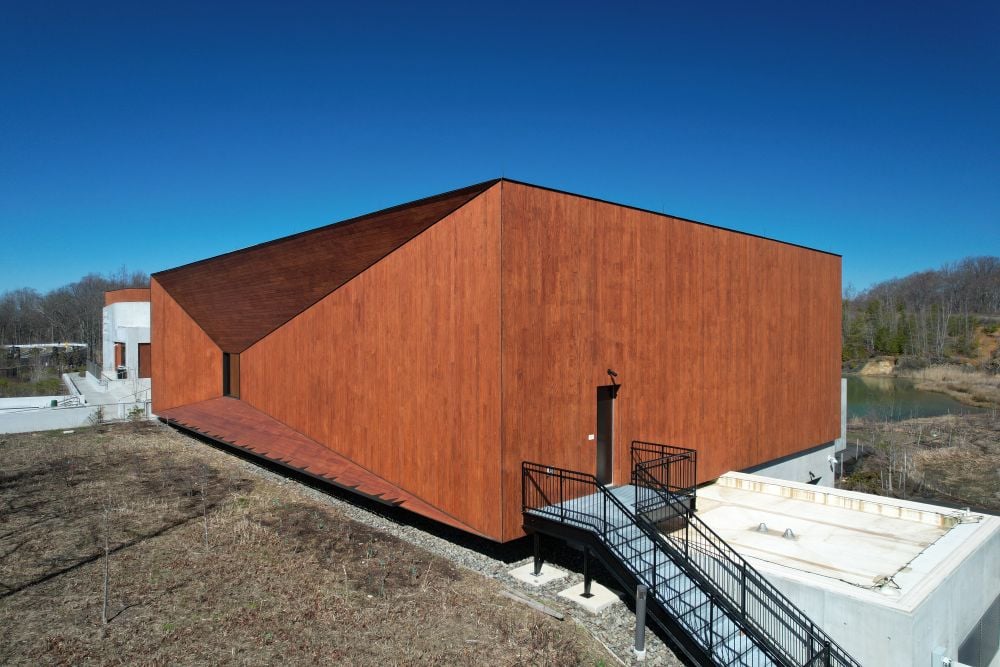
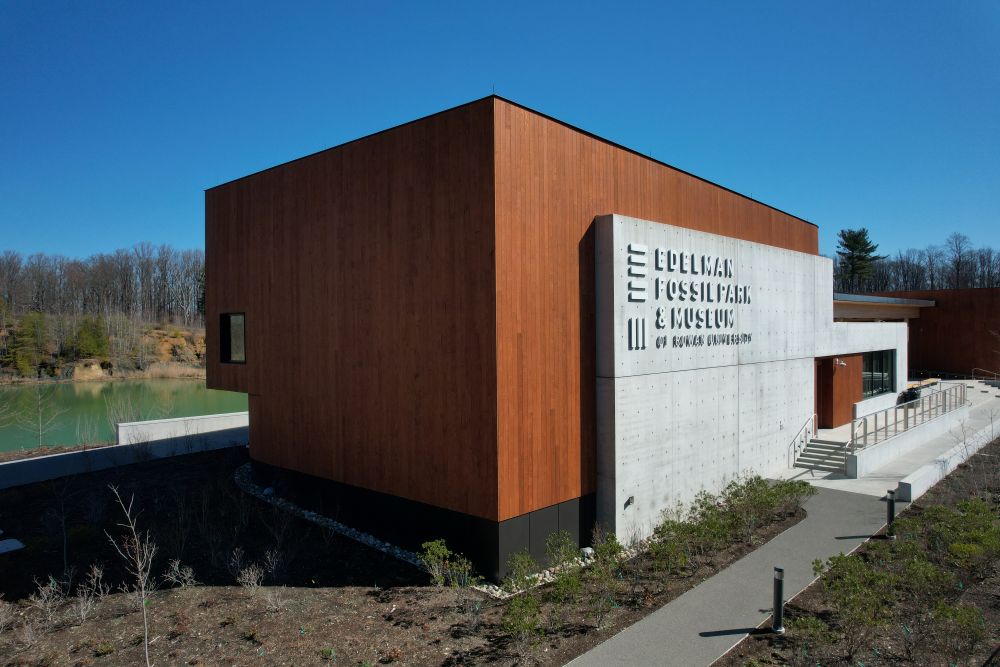
Initially, the design team envisioned using clear vertical grain western red cedar for the cladding to achieve a warm, natural aesthetic. However, given New Jersey’s climate, the museum’s sustainability goals, and the need for long-lasting performance with minimal maintenance, cedar proved less than ideal. Enter reSAWN TIMBER co., a family-owned manufacturer of high-performing, highly-designed exterior wood materials. After a thorough evaluation, reSAWN TIMBER co. led the architects and contractors toward FSC®-certified Accoya wood for the primary siding material and for the battens to support long-term system integrity. By custom profiling and finishing the Accoya siding, reSAWN delivered the rich texture, lasting beauty, and design flexibility that the design team required. More than 21,000 square feet of Accoya siding and 15,000 linear feet of Accoya battens were installed, making it a defining feature of the building’s architecture.

Material Selection: Custom-Finished Accoya® Wood
Accoya wood’s unique advantages made it the perfect fit for this project. Derived from fast-growing, plantation-grown pine, Accoya undergoes a patented acetylation process that transforms the wood at a molecular level. This process dramatically enhances durability, dimensional stability, and resistance to rot and decay—qualities that allow the material to withstand the region’s hot summers, cold winters, and year-round humidity. Unlike many traditional timbers, Accoya is non-toxic, recyclable, and backed by a 50-year above-ground warranty, ensuring that the museum will endure to welcome generations of visitors.


Balancing Aesthetics and Performance
Equally important as sustainability was the building’s aesthetics. The project required a natural wood tone reminiscent of red cedar while offering better color retention over time. To achieve this, reSAWN developed a custom two-coat finish system specifically for the project. This finish not only delivered the warm, inviting look the architects had envisioned but also ensured long-term performance and reduced maintenance. Full-scale mockups were created and tested over multiple seasons to confirm the resilience of the finish, giving the team confidence in both the appearance and performance before full installation.
Technical Support and Installation
Throughout construction, reSAWN’s technical team worked closely with installers, advising on details such as fasteners, overlaps, panel spacing, and joint design. Site visits and hands-on support ensured that the installation process met both performance and design expectations, further demonstrating the value of choosing Accoya and working with experts familiar with the material.
A Lasting Impact and a Future Vision
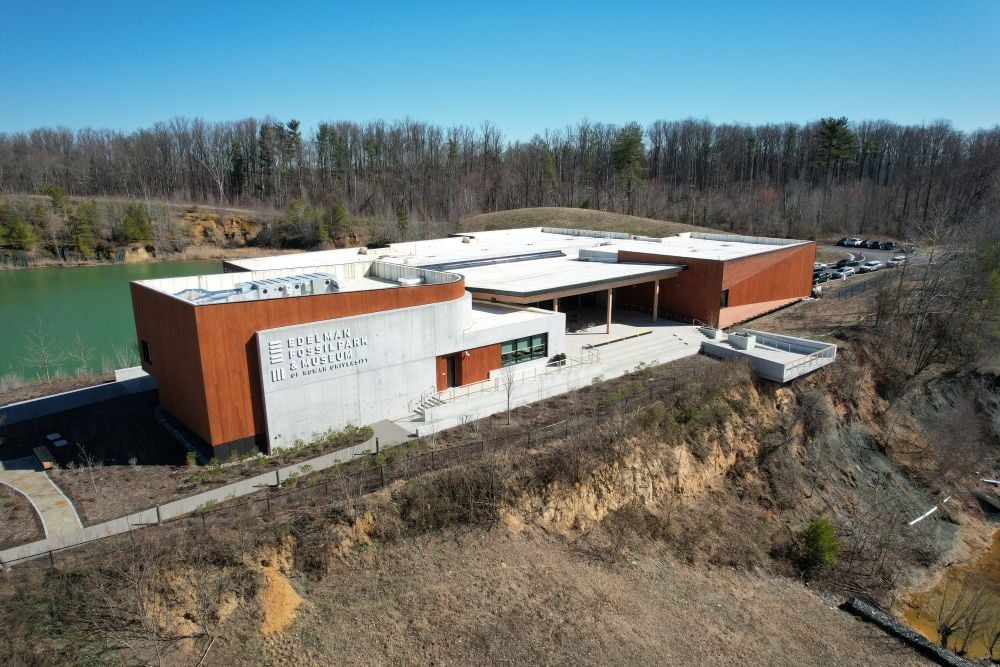
The result is a museum that embodies sustainability in every sense. By selecting Accoya, the project team dramatically reduced embodied carbon while ensuring the façade will remain durable and low-maintenance for decades to come. More than just a siding choice, Accoya became central to fulfilling the museum’s mission: demonstrating how the past can inspire a more sustainable future.
This project underscores the growing role of acetylated wood in high-performance, environmentally ambitious architecture. The selection of Accoya proved that it’s possible to combine natural warmth, outstanding durability, and environmental responsibility without compromise—a lesson that resonates far beyond Edelman Fossil Park.
Project Details:
- Project: Edelman Fossil Park & Museum of Rowan University
- Location: Mantua, New Jersey
- Size: 44,000 square feet
- Images: Photography by © Jeff Goldberg/Esto | other images courtesy of reSAWN TIMBER Co.
- Architects: Ennead Architects & KSS Architects
- Manufacturer: reSAWN TIMBER co.
- Builders: Jingoli & Sloan & Company
- Exterior Siding: 21,000 sq. ft. of custom FSC®-Certified Accoya® wood
- Battens: 15,000 linear ft. of custom FSC®-Certified Accoya®
Discovering the Past While Building a Sustainable Future at Edelman Fossil Park & Museum
Accoya vs. Cedar: No Contest!
Initially, the design team envisioned using clear vertical grain western red cedar for the cladding to achieve a warm, natural aesthetic. However, given New Jersey’s climate, the museum’s sustainability goals, and the need for long-lasting performance with minimal maintenance, cedar proved less than ideal. Enter reSAWN TIMBER co., a family-owned manufacturer of high-performing, highly-designed exterior wood materials. After a thorough evaluation, reSAWN TIMBER co. led the architects and contractors toward FSC®-certified Accoya wood for the primary siding material and for the battens to support long-term system integrity. By custom profiling and finishing the Accoya siding, reSAWN delivered the rich texture, lasting beauty, and design flexibility that the design team required. More than 21,000 square feet of Accoya siding and 15,000 linear feet of Accoya battens were installed, making it a defining feature of the building’s architecture.
Material Selection: Custom-Finished Accoya® Wood
Accoya wood’s unique advantages made it the perfect fit for this project. Derived from fast-growing, plantation-grown pine, Accoya undergoes a patented acetylation process that transforms the wood at a molecular level. This process dramatically enhances durability, dimensional stability, and resistance to rot and decay—qualities that allow the material to withstand the region’s hot summers, cold winters, and year-round humidity. Unlike many traditional timbers, Accoya is non-toxic, recyclable, and backed by a 50-year above-ground warranty, ensuring that the museum will endure to welcome generations of visitors.
Balancing Aesthetics and Performance
Equally important as sustainability was the building’s aesthetics. The project required a natural wood tone reminiscent of red cedar while offering better color retention over time. To achieve this, reSAWN developed a custom two-coat finish system specifically for the project. This finish not only delivered the warm, inviting look the architects had envisioned but also ensured long-term performance and reduced maintenance. Full-scale mockups were created and tested over multiple seasons to confirm the resilience of the finish, giving the team confidence in both the appearance and performance before full installation.
Technical Support and Installation
Throughout construction, reSAWN’s technical team worked closely with installers, advising on details such as fasteners, overlaps, panel spacing, and joint design. Site visits and hands-on support ensured that the installation process met both performance and design expectations, further demonstrating the value of choosing Accoya and working with experts familiar with the material.
A Lasting Impact and a Future Vision
The result is a museum that embodies sustainability in every sense. By selecting Accoya, the project team dramatically reduced embodied carbon while ensuring the façade will remain durable and low-maintenance for decades to come. More than just a siding choice, Accoya became central to fulfilling the museum’s mission: demonstrating how the past can inspire a more sustainable future.
This project underscores the growing role of acetylated wood in high-performance, environmentally ambitious architecture. The selection of Accoya proved that it’s possible to combine natural warmth, outstanding durability, and environmental responsibility without compromise—a lesson that resonates far beyond Edelman Fossil Park.
Project Details:
- Project: Edelman Fossil Park & Museum of Rowan University
- Location: Mantua, New Jersey
- Size: 44,000 square feet
- Images: Photography by © Jeff Goldberg/Esto | other images courtesy of reSAWN TIMBER Co.
- Architects: Ennead Architects & KSS Architects
- Manufacturer: reSAWN TIMBER co.
- Builders: Jingoli & Sloan & Company
- Exterior Siding: 21,000 sq. ft. of custom FSC®-Certified Accoya® wood
- Battens: 15,000 linear ft. of custom FSC®-Certified Accoya®
More projects