Why Dimensional Stability Matters More Than You Think in Decking
Discover why Accoya sets the benchmark for decking durability and dimensional stability, delivering flatter boards, longer lifespans, and reliable performance in every climate.
02.13.2026
When decking starts to fail, the problem isn’t always obvious. Boards cup, gaps widen, fasteners loosen and surfaces crack, often within just a few seasons. Many homeowners assume these issues come from poor installation, but more often than not, the real culprit is hidden beneath the surface: material movement.
This movement is driven by dimensional instability, a material’s tendency to expand, contract, twist, or warp as it responds to moisture and temperature changes. In decking, where boards are constantly exposed to rain, humidity, sun, and seasonal extremes, dimensional stability isn’t a nice-to-have feature. It’s the foundation of long-term performance.
Highly dimensionally stable decking stays flat, smooth, and secure over time. It maintains consistent gaps, protects fasteners, and preserves the deck’s appearance with far less maintenance. On the flip side, unstable materials can lead to ongoing repairs, safety concerns, and costly replacements, long before a deck should reach the end of its life.
That’s why dimensional stability matters more than most people realize, and why Accoya has become the go-to choice for builders, architects, and homeowners who want a deck that lasts. With industry-leading dimensional stability proven in real-world conditions, Accoya delivers predictable performance, exceptional durability, and peace of mind in every climate.
What is dimensional stability in decking?
Dimensional stability refers to how well a decking material maintains its original size and shape when exposed to moisture and changing weather conditions. Because decks live outdoors year-round, every board is constantly reacting to rain, humidity, heat, and drying cycles. The more a material moves, the less stable, and less reliable, it becomes over time.
Moisture-related movement is the biggest driver of instability in decking. As boards absorb moisture they expand; as they dry out, they contract. Repeated wet-dry cycles can cause boards to cup, twist, or warp, especially when moisture enters unevenly across the surface or edges. Over time, this movement stresses fasteners, opens up gaps, and compromises the deck’s overall integrity.
Many common deck materials are affected by this natural movement.
- Untreated softwoods, such as pine decking or fir, are particularly prone to swelling, shrinking, and warping as they absorb moisture.
- Conventional hardwoods, including tropical hardwoods, while often chosen for their appearance, can still experience significant expansions and contraction, especially in humid or coastal environments.
- Composite decking and composite deck boards, though often marketed as low maintenance, can expand and contract with temperature changes and may sag or distort over long spans.
When dimensional instability shows up, it impacts more than just appearance. Uneven boards and shifting gaps can create trip hazards and reduce overall safety. Warping and cracking accelerate wear and tear, while loose fasteners and uneven structures detract from the deck’s aesthetics and curb appeal.
Ultimately, poor dimensional stability shortens a deck’s lifespan and increases the time and cost required to keep it looking and performing as intended.

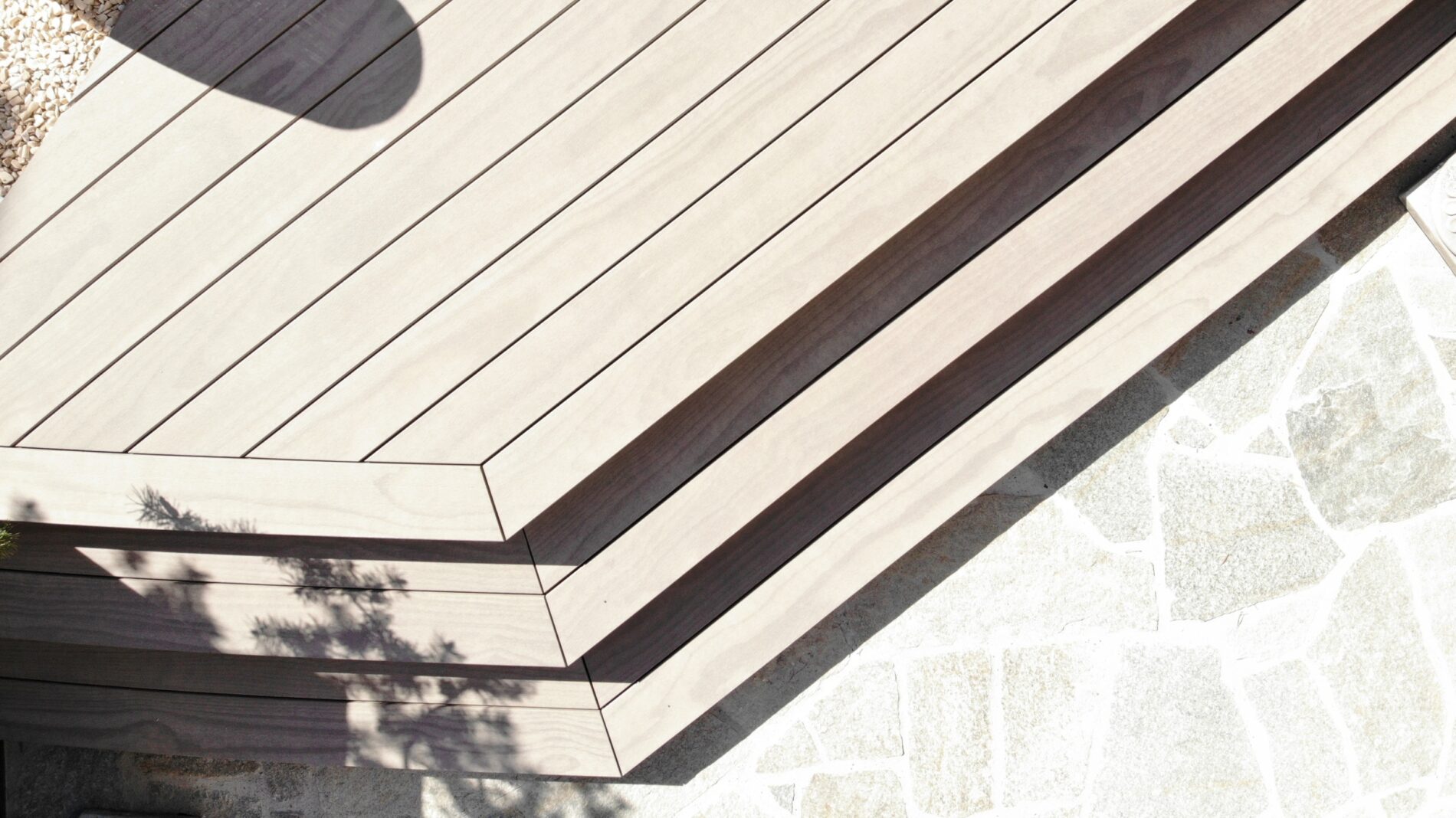
Distributor: Grupo Gámiz
The hidden costs of instability
Dimensional instability may not be obvious at first, but over time it leads to a cascade of issues that increase both maintenance demands and long-term costs. As decking boards repeatedly expand, contract, and distort, performance and appearance begin to suffer.
Common consequences of unstable decks include:
- Accelerated wear and tear, resulting in more frequent maintenance, repairs, or premature board replacement.
- Uneven gaps and shifting boards that reduce walking comfort and overall usability.
- Nail pops, raised fasteners, and surface cracking caused by constant movement and fastener stress.
- Declining curb appeal, as warping, cupping, and visible defects make the deck look worn and poorly maintained.
Instability also creates problems that aren’t always visible but are just as critical.
Structural risks can include:
- Compromised load distribution, as moving boards no longer sit evenly across the framing,
- Reduced fastener integrity, leading to loosening connections and decreased holding power over time.
- Increased safety concerns, especially in high-traffic areas where movement is most pronounced.
Together, these hidden costs show how dimensional instability can shorten the lifespan of decking and turn what should be a long-term investment into an ongoing expense.
When decking starts to fail, the problem isn’t always obvious. Boards cup, gaps widen, fasteners loosen and surfaces crack, often within just a few seasons. Many homeowners assume these issues come from poor installation, but more often than not, the real culprit is hidden beneath the surface: material movement.
This movement is driven by dimensional instability, a material’s tendency to expand, contract, twist, or warp as it responds to moisture and temperature changes. In decking, where boards are constantly exposed to rain, humidity, sun, and seasonal extremes, dimensional stability isn’t a nice-to-have feature. It’s the foundation of long-term performance.
Highly dimensionally stable decking stays flat, smooth, and secure over time. It maintains consistent gaps, protects fasteners, and preserves the deck’s appearance with far less maintenance. On the flip side, unstable materials can lead to ongoing repairs, safety concerns, and costly replacements, long before a deck should reach the end of its life.
That’s why dimensional stability matters more than most people realize, and why Accoya has become the go-to choice for builders, architects, and homeowners who want a deck that lasts. With industry-leading dimensional stability proven in real-world conditions, Accoya delivers predictable performance, exceptional durability, and peace of mind in every climate.
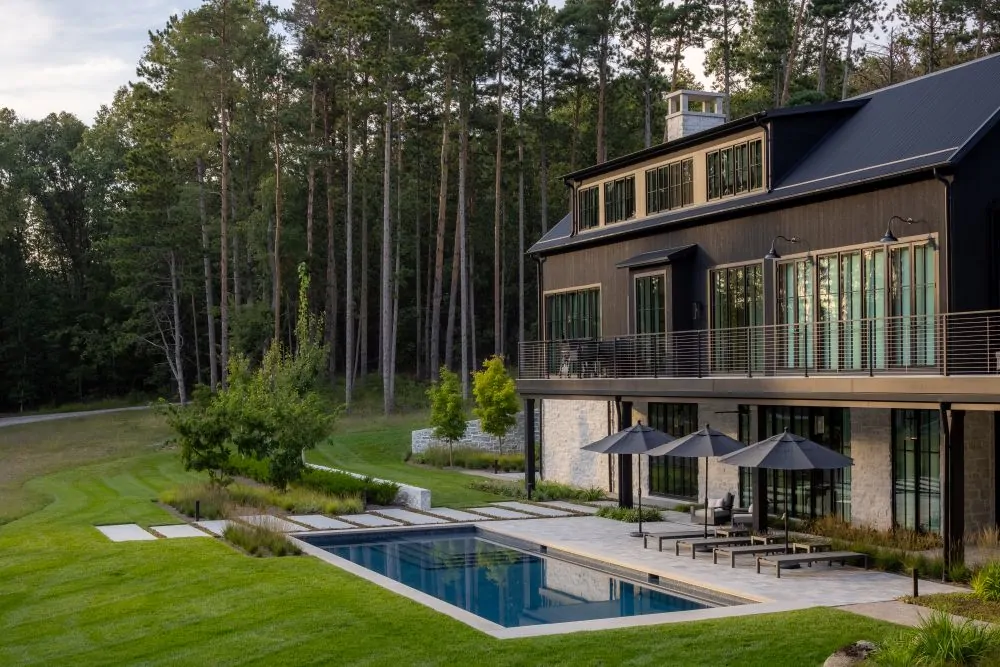
Architect: Northworks Architects
Contractor: Skyline Builders
Manufacturer: Delta Millworks
Photography: Tysen Kay
What is dimensional stability in decking?
Dimensional stability refers to how well a decking material maintains its original size and shape when exposed to moisture and changing weather conditions. Because decks live outdoors year-round, every board is constantly reacting to rain, humidity, heat, and drying cycles. The more a material moves, the less stable, and less reliable, it becomes over time.
Moisture-related movement is the biggest driver of instability in decking. As boards absorb moisture they expand; as they dry out, they contract. Repeated wet-dry cycles can cause boards to cup, twist, or warp, especially when moisture enters unevenly across the surface or edges. Over time, this movement stresses fasteners, opens up gaps, and compromises the deck’s overall integrity.
Many common deck materials are affected by this natural movement.
- Untreated softwoods, such as pine decking or fir, are particularly prone to swelling, shrinking, and warping as they absorb moisture.
- Conventional hardwoods, including tropical hardwoods, while often chosen for their appearance, can still experience significant expansions and contraction, especially in humid or coastal environments.
- Composite decking and composite deck boards, though often marketed as low maintenance, can expand and contract with temperature changes and may sag or distort over long spans.
When dimensional instability shows up, it impacts more than just appearance. Uneven boards and shifting gaps can create trip hazards and reduce overall safety. Warping and cracking accelerate wear and tear, while loose fasteners and uneven structures detract from the deck’s aesthetics and curb appeal.
Ultimately, poor dimensional stability shortens a deck’s lifespan and increases the time and cost required to keep it looking and performing as intended.
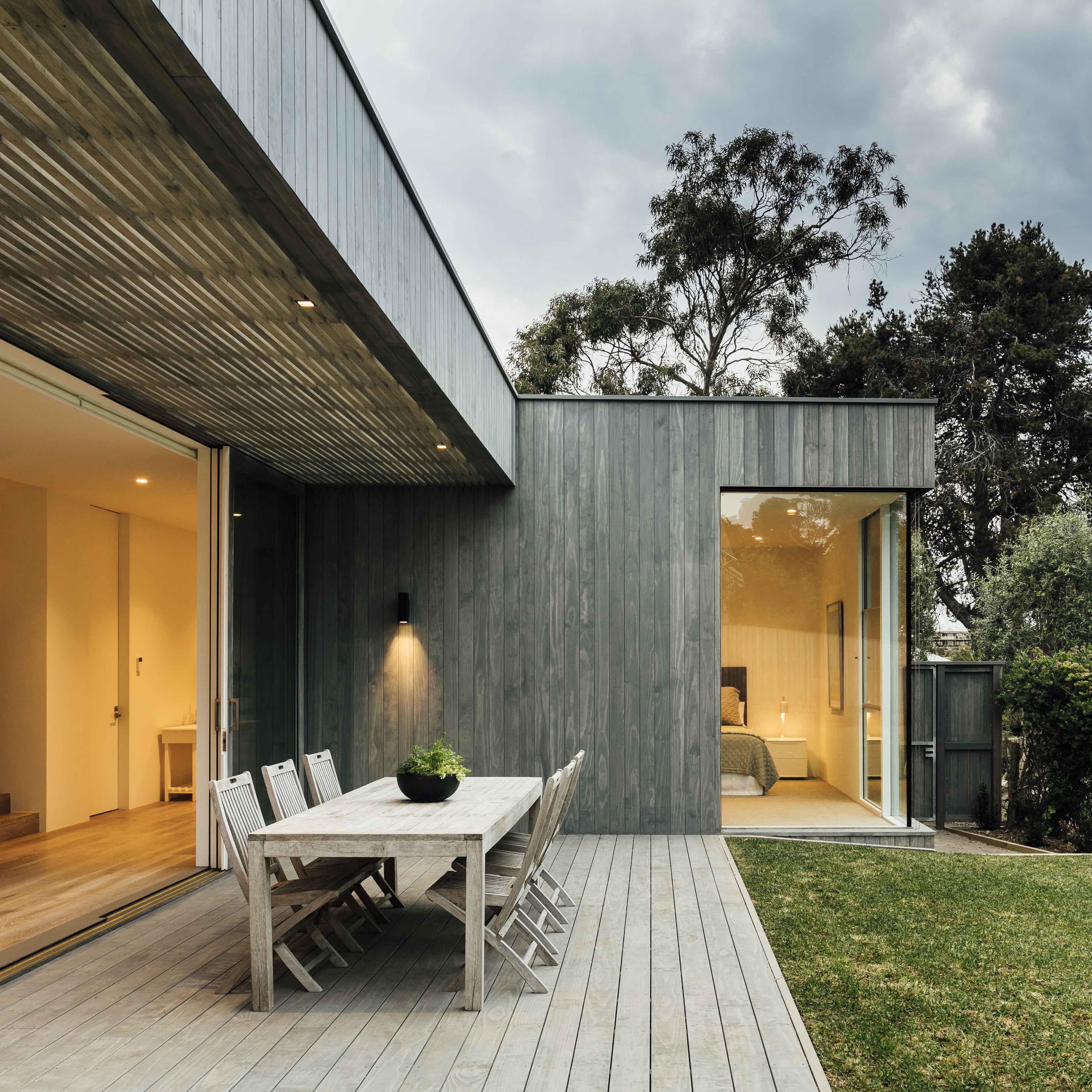
Builder: Howroyd Homes Pty Ltd
Photographer: Michael Kai Photography
The hidden costs of instability
Dimensional instability may not be obvious at first, but over time it leads to a cascade of issues that increase both maintenance demands and long-term costs. As decking boards repeatedly expand, contract, and distort, performance and appearance begin to suffer.
Common consequences of unstable decks include:
- Accelerated wear and tear, resulting in more frequent maintenance, repairs, or premature board replacement.
- Uneven gaps and shifting boards that reduce walking comfort and overall usability.
- Nail pops, raised fasteners, and surface cracking caused by constant movement and fastener stress.
- Declining curb appeal, as warping, cupping, and visible defects make the deck look worn and poorly maintained.
Instability also creates problems that aren’t always visible but are just as critical.
Structural risks can include:
- Compromised load distribution, as moving boards no longer sit evenly across the framing,
- Reduced fastener integrity, leading to loosening connections and decreased holding power over time.
- Increased safety concerns, especially in high-traffic areas where movement is most pronounced.
Together, these hidden costs show how dimensional instability can shorten the lifespan of decking and turn what should be a long-term investment into an ongoing expense.
Find Your Local Decking Expert
Explore our range of local distributors and manufacturers in your region. Use our search tool to find your nearest Accoya supplier today.
Durability and dimensional stability: Why Accoya stands out
Not all wood behaves the same outdoors. The key difference lies in how wood interacts with moisture. Traditional decking woods absorb and release water as humidity and weather change, which drives the expansion, contraction, and distortion that shorten a deck’s lifespan. Woods that are engineered or modified to resist this moisture movement deliver far more consistent, long-term performance.
Accoya wood is designed to solve this challenge. Through an acetylation process, the wood’s cell structure is modified so it absorbs significantly less moisture. This results in exceptional dimensional stability, far beyond that of untreated softwoods, conventional hardwoods, or many alternative decking materials. The result is real-world performance that stays predictable year after year.
For decking applications, that stability delivers clear advantages:
- Flatter, smoother boards that resist cupping, warping, and twisting
- Consistent spacing and alignment that maintain the deck’s original design intent
- Long-lasting performance with reduced wear from seasonal movement
- Minimal maintenance requirements, saving time and long-term costs
By staying stable in changing conditions, Accoya helps decks look better, feel safer underfoot, and last significantly longer. This makes it the smart choice for anyone who wants a durable, low-maintenance outdoor living space.
Climate and environmental factors
Where a deck is built has a major impact on how it performs over time. Across the US, regional climate differences, from coastal humidity to desert dryness, place very different demands on decking materials. In humid or rainy environments, boards are exposed to frequent moisture absorption, while in hot, dry regions rapid drying can pull moisture out just as aggressively. Both extremes increase the risk of movement in dimensionally unstable materials.
Accoya performs differently. Thanks to its exceptional dimensional stability, Accoya responds predictably to moisture in every climate zone. Whether installed in the humidity of the Southwest, the freeze-thaw cycles of the Midwest and Northeast, of the heat and arid conditions of the Southwest, Accoya maintains its shape and performance with minimal movement.
This consistency makes it a reliable decking choice across all US climates, helping ensure long-lasting results no matter where the project is located.
Installation benefits of stable wood decking boards
Dimensional stability doesn’t just improve long-term performance, it also makes installation faster, easier, and more precise. When decking boards stay straight and consistent, installers can focus on craftsmanship instead of compensating for material movement.
Stable decking delivers clear installation advantages:
- Straighter boards and consistent gaps, making layout simpler and results more predictable
- Less stress on fasteners, reducing the risk of nail pops, screw loosening, or premature failure
- Fewer callbacks, as boards are less likely to shift, warp, or create issues after installation
Greater stability also opens the door to modern deck designs.
- Tighter tolerances can be achieved without sacrificing performance
- Hidden fastener systems work more effectively when boards don’t move excessively
- Cleaner lines and smoother surfaces elevate the finished look of the deck
With a dimensionally stable material like Accoya, installers gain confidence that the deck will look and perform the way it was designed to, on day one and for years to come.
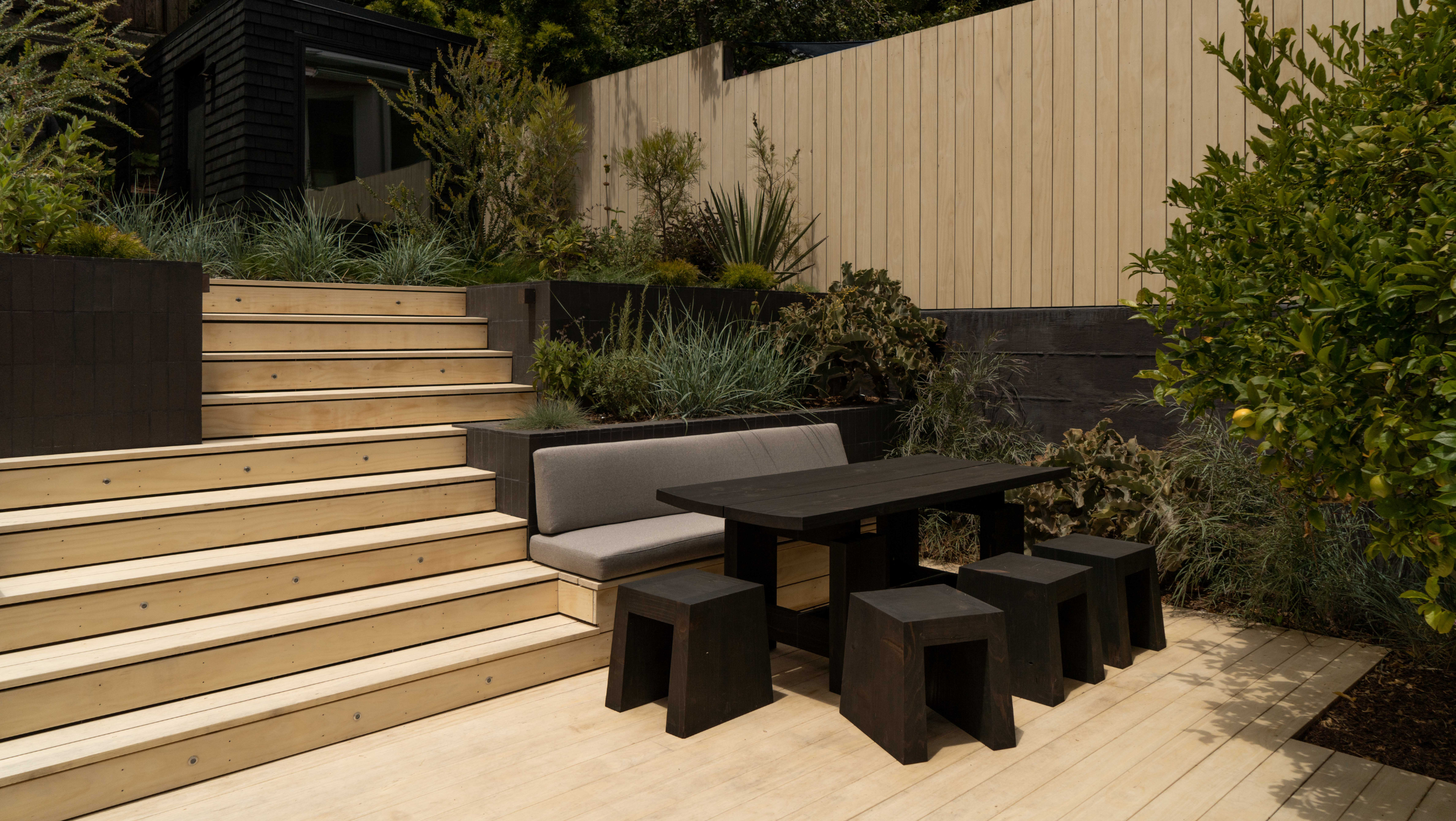
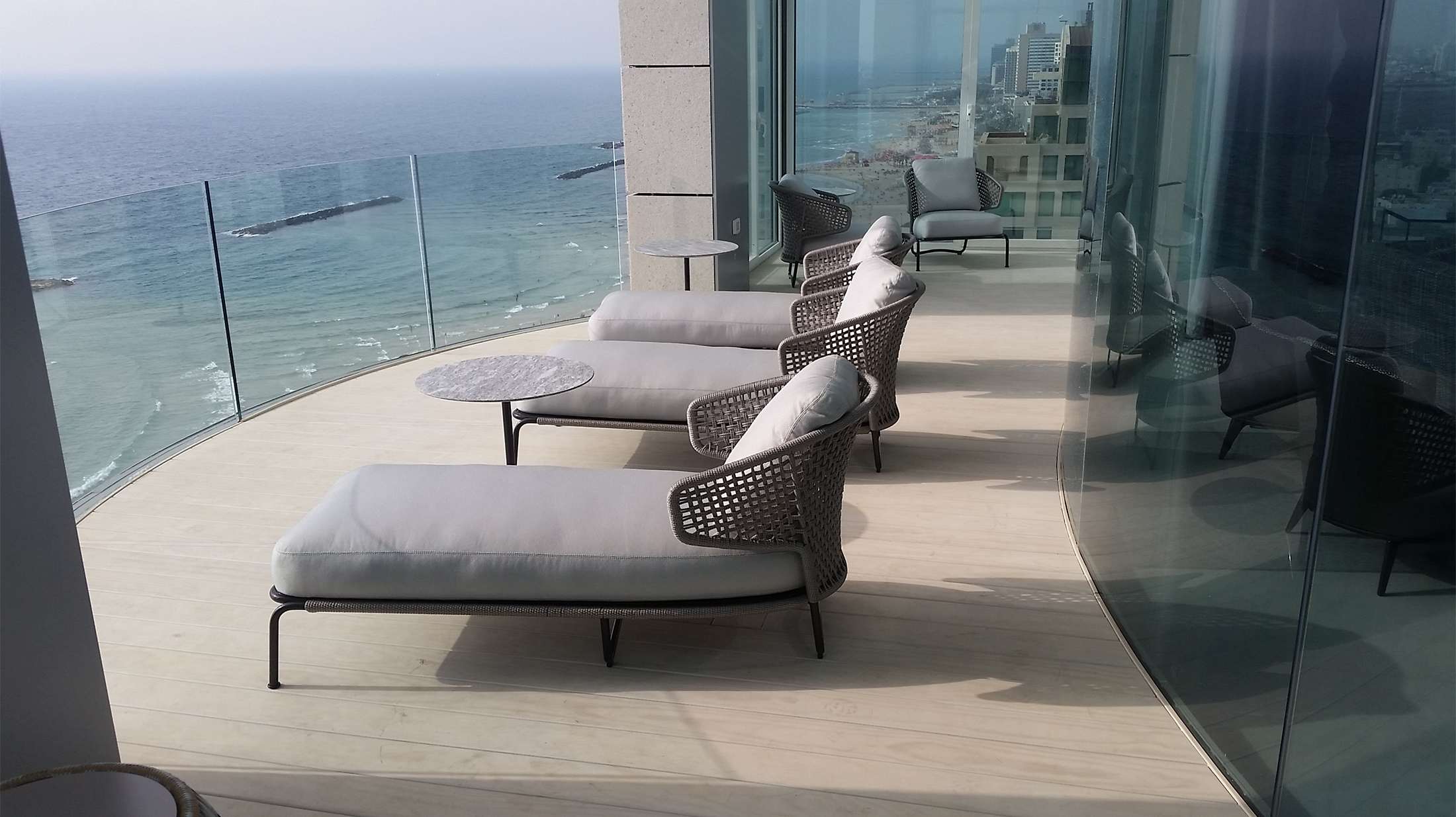
Designer: OR.CA Living
Builder: Brad Doran
Sustainability and long-term value
Dimensional stability plays a major role in the sustainability and long-term value of a deck. When a decking material lasts longer and maintains its performance over time, it reduces the need for frequent repairs or full replacement. Fewer replacement cycles mean less material sent to landfills, lower resource consumption, and a smaller overall environmental footprint.
Accoya supports these goals through its durability and responsible sourcing. Its long service life helps minimize waste over the life of a project, while its low maintenance requirements reduce the need for repeated treatments or resource-intensive upkeep.
In addition, Accoya is FSC® certified, ensuring the wood comes from responsibly managed forests and meets rigorous environmental standards. Together, these factors make Accoya a decking choice that delivers lasting value while supporting more sustainable building practices.
Dimensional stability: The secret to decks that last
When it comes to decking performance, dimensional stability is the factor that ties everything together. It influences how a deck looks, how it feels underfoot, and how well it holds up over time. Stable boards resist warping, cupping, and excessive movement, helping preserve clean lines, consistent gaps, and a safe, comfortable surface season after season.
Just as importantly, superior stability reduces maintenance demands and extends the overall lifespan of the deck, delivering greater long-term value.
This is where Accoya stands apart. With industry-leading dimensional stability, Accoya provides a durable, low-maintenance decking solution that performs predictably in every US climate. The result is a deck that stays flatter, lasts longer, and maintains its appearance with far less effort. This gives homeowners, builders, and designers confidence in their investment.
If you’re planning a deck built to last, start with a material designed for stability. Find your local Accoya supplier and see how dimensional stability can make all the difference in your next decking project.
Header image:
Distributor: Holz Pur
Where to Buy
You can buy Accoya and Accoya products from our selection of distributors or manufacturers in your region. Use our map search tool to find your nearest Accoya supplier.
You are currently on the Accoya site
Would you like to visit the Accoya Site to view all relevant content for your location?