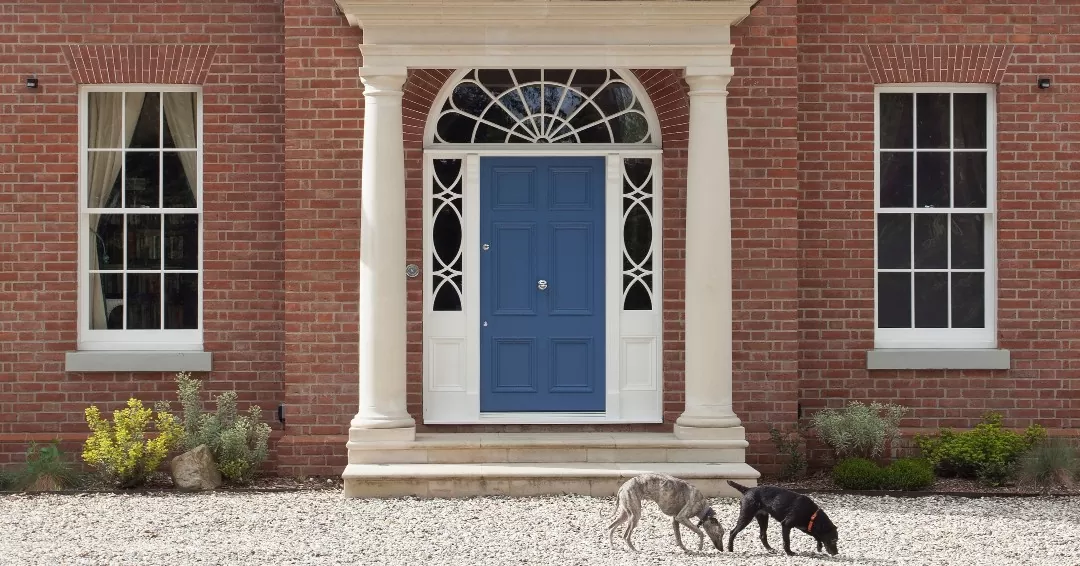
The Psychology of an Entrance: Why Wooden Doors Make Us Feel at Home
Discover how wooden doors create an instant sense of warmth, security and belonging, turning every entrance into an emotional welcome home.
19.09.2025
When we think about what makes a house feel like a home, we often picture cosy interiors, personal touches and comforting spaces. But long before anyone steps inside, the emotional experience begins at the front door. Our entrance isn’t just a point of access; it’s a powerful psychological marker that influences how we feel and how others perceive our space.
The material, colour and design of a front door play a surprisingly significant role in shaping that first impression. Wooden doors, in particular, have a timeless appeal that goes beyond aesthetics. They evoke feelings of warmth, safety and belonging, qualities that speak directly to our emotional instincts. There’s a reason we describe something as ‘welcoming’ or ‘homely’, these aren’t just visual cues, they are emotional responses.
In this article, we will explore why wooden doors are more than just functional features. From their symbolic role in marking the threshold between public and private life, to how their style and colour express personality and mood. We will uncover the psychology behind your front door and how the right choice can transform not just your home, but the way it makes people feel.
More than a threshold: How entrances shape our emotions
The entrance to a home does more than simply separate the outside world from the inside. It sets the emotional tone for everything that follows. Whether it’s you own return after a long day or a guest’s first visit, the front door is the first physical and psychological point of contact with your space. It’s where impressions are formed, expectations are set, and feelings are acknowledged.
Subtly but powerfully, an entrance can evoke emotions such as comfort, security, curiosity or even unease. Details like the door’s material, colour, design and overall condition all feed into our subconscious perception of what lies beyond. A thoughtfully chosen entrance can signal care, character and warmth, making us feel instantly at ease before we’ve even stepped inside.
In essence, your front door isn’t just an architectural feature, it’s the beginning of a story and how that story begins can shape the entire experience of your home.
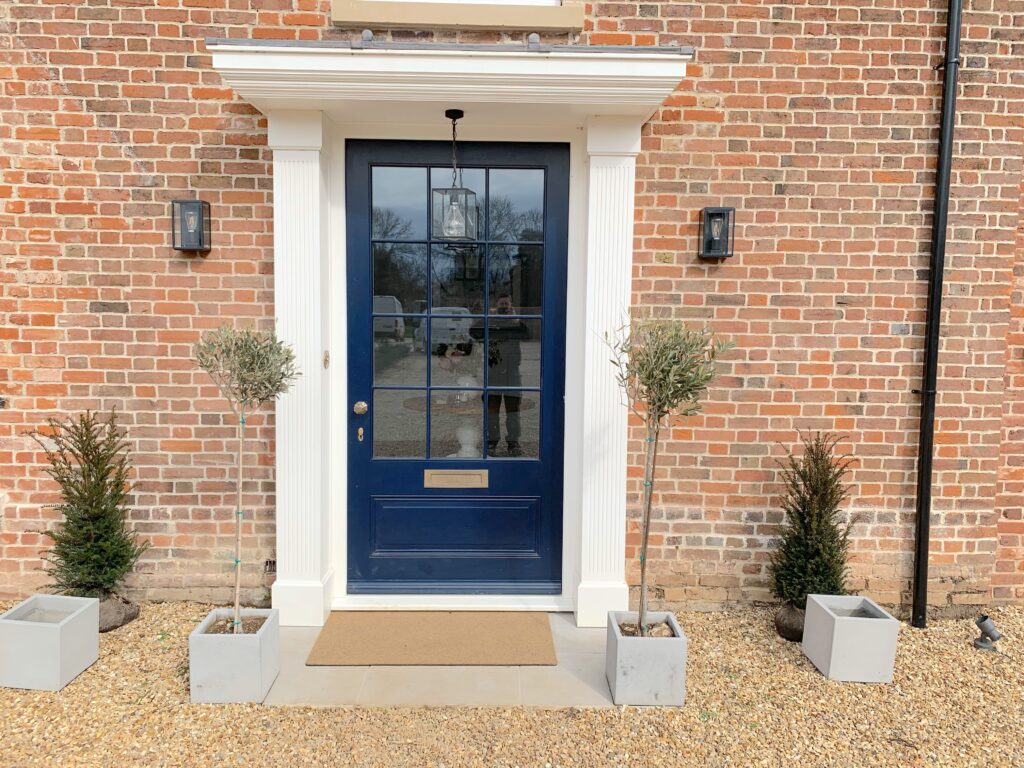
Joinery: DGM Joinery Ltd
The emotional power of wood: Why wooden doors feel so inviting
There’s something inherently comforting about natural materials, and wood carries a unique emotional weight. External wooden doors go beyond function, they speak to our senses and tap into deep-rooted associations with home, safety and tradition.
Here’s why wooden doors have such a strong emotional pull:
- Warmth and texture: The natural grain and tactile feel of wood offer a warmth that synthetic materials can’t replicate, making a space feel immediately more welcoming.
- A sense of security: Solid timber conveys strength and durability, which can subconsciously reassure us that what lies behind the door is safe and protected.
- Connection to nature: Wood brings the outside in. Its organic presence creates a calming effect, echoing the serenity of natural surroundings.
- Timeless familiarity: Wooden doors have been a staple of homes for centuries, creating a sense of continuity, tradition and stability.
- Emotional anchoring: Over time, a wooden front door can become a personal landmark, greeting us daily and marking the emotional boundary between the world outside and the comfort of home.
Choosing a wooden door isn’t a design decision, it’s a way of creating a meaningful, emotional connection with your living space.
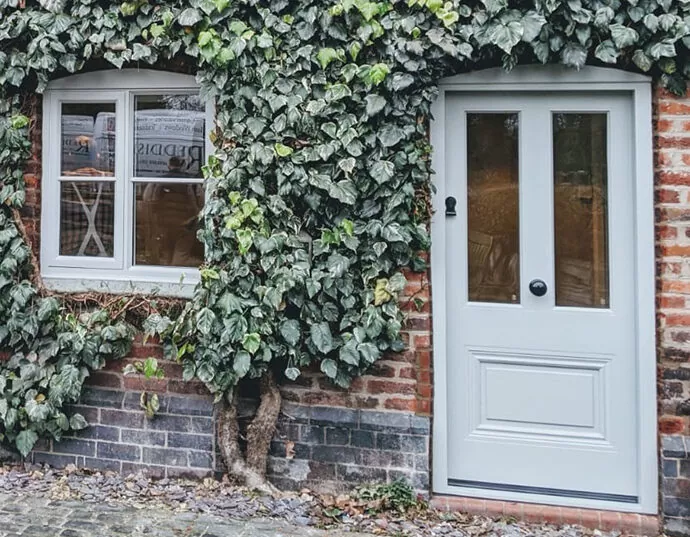
Joinery: Reddish Joinery
Doors as symbols: Transitions, privacy and personal space
A front door is far more than a physical barrier, it’s a powerful symbol rooted in our cultural, emotional and psychological understanding of space. From literature to everyday life, doors represent change, choice and connection. When it comes to the home, their meaning becomes even more personal.
Here’s how doors act as symbolic anchors in our lives:
- Transitions and thresholds: A front door marks the passage from the public world to private life. Crossing it often signals a shift, from work to rest, from external demands to internal comfort.
- Privacy and protection: External doors give us control over who enters our space, offering both physical security and psychological peace of mind.
- A moment of pause: Knocking, ringing a bell or simply standing before a closed door creates a moment of anticipation, reminding us that what lies beyond is personal.
- Connection and separation: While doors divide spaces, they also create points of connection, inviting guests in, welcoming loved ones and providing much-needed solitude.
- Symbol of choice: Whether opening or closing, a door often represents a decision, making it a daily metaphor for opportunity, change or boundaries.
Express yourself: What your door says about you
Your front door is one of the first things people notice about your home. The material, style and colour of your door all contribute to the impression your home makes on visitors, neighbours and even passers-by.
Here’s how your wooden door can speak volumes about you:
- Style reflects personality: A classic panelled door might suggest timeless taste and tradition, while a sleek, minimalist design leans more modern and design conscious. Your door can hint at who you are before guests ever step inside.
- Colour communicates emotion: Warm, earthy tones like deep reds or forest greens often evoke comfort and hospitality. Bolder hues, such as navy, black or even mustard yellow, can suggest confidence, creativity or a flair for the unconventional.
- Design shows attention to detail: Whether it’s ornate glass panels, unique hardware or a custom finish, thoughtful design choices signal pride in your home and a desire to create a meaningful impression.
- Values made visible: Choosing sustainably sourced wood, for example, can subtly reflect a commitment to the environment, something that matters more than ever in modern design.
Ultimately, your front door is a form of personal expression. It tells a story, not just of your home’s architecture, but of your values, tastes and the kind of welcome you want to extend to the world.
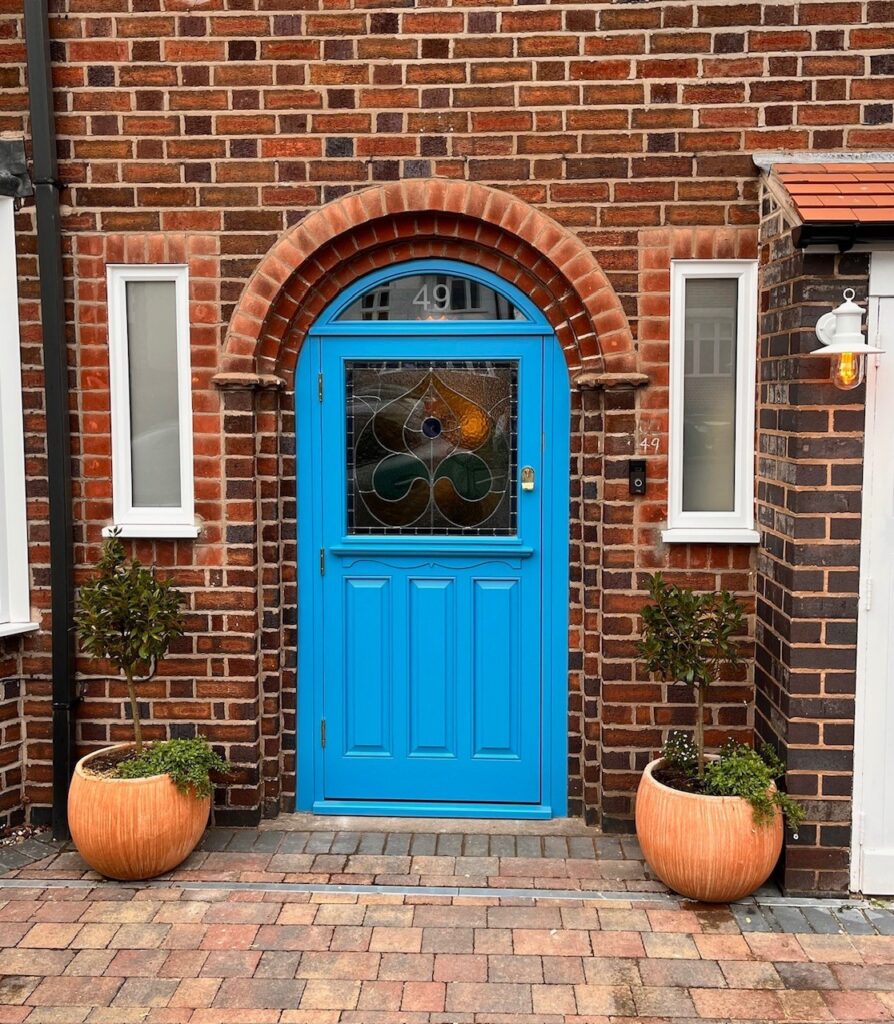
Find Your Local Wooden Door Expert
Explore our range of local distributors and manufacturers in your region. Use our search tool to find your nearest Accoya supplier today.
Finding your style: Traditional, contemporary or classic panelled doors
Choosing the style of your wooden door is about more than matching architecture, it’s about what kind of character you want your home to project, and how you want to feel every time you return. Accoya’s range of wooden doors offers versatility so you can lean into tradition, modernity or somewhere in between.
Traditional or panelled wooden doors
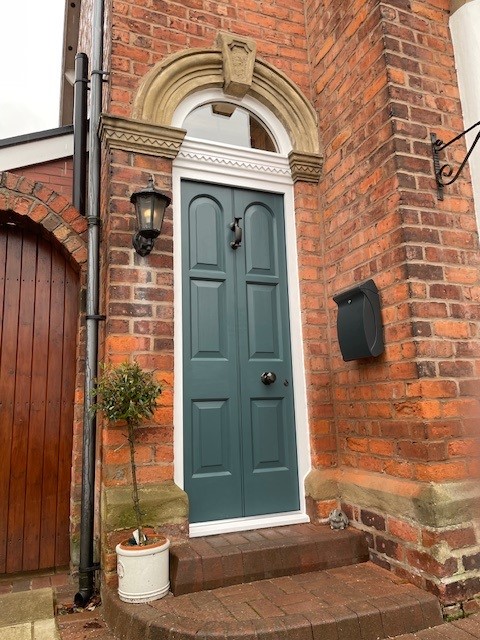
Traditional or panelled wooden doors often have symmetric designs that are seen in Victorian, Georgian an Edwardian homes.
This design can evoke history, solidity, and permanence. They create a sense of rootedness and familiarity. With this design, visitors may feel the house respects tradition and craftmanship.
Contemporary and modern doors
These doors have cleaner lines, minimal ornamentation and maybe large, glazed areas. People opting for modern doors also frequently choose bold colours or contrasting frames.
Contemporary wooden doors suggest openness, simplicity and a forward-thinking mindset. They can give an impression of sleekness and confidence to those visiting.
Classic panelled with a modern twist
Another popular door design is to incorporate both a traditional panel layout but with modern materials, glazing details and hardware.
This communicates a balance of comfort and personality. It offers both warmth, traditional and freshness, ideal for those who want character without feeling stuck in the past.
How Accoya wooden doors support these styles
Using Accoya wood gives you flexibility to choose among those styles while getting performance benefits.
- Material adaptability: Accoya doors are durable, stable and have excellent resistance to shrinkage/swell, which means intricate panelled styles hold up well over time without warping or misfitting. The stability also ensures whether rain or shine, the door always opens and closes smoothly.
- Colour and finish compatibility: Accoya is well-suited to a wide variety of coatings and colours. Whether you want natural wood tones or strong painted colours, the finish lasts longer because of Accoya’s stability.
- Door styles: Accoya wood can be used for a range of external door types, including French doors, bifold doors, garage doors and front wooden doors. These can be rendered in different design styles.
How to choose based on your home
When deciding which style suits you, consider:
- Architectural context: Does your home have period features, mouldings, decorative frames, or is it a new build with smooth clean surfaces? Matching to or thoughtfully contrasting with the rest of the home makes a big difference.
- Desired mood and impression: Do you want guests to feel warm and settled, or impressed by sleek modernity? Traditional panelled doors tend to give comfort and gravitas while contemporary ones suggest elegance, innovation or minimalism.
- Lightness and openness: If you want more natural light, glazed panels or French styles help. These are often used in more traditional homes too but with more glass they also work in modern spaces. Think balance between privacy and inviting openness.
- Colour and detailing: A classic panelled door in a muted, heritage paint colour gives a different impression than the same door in a bold hue or with contrasting hardware. Even within the same style, finish details matter enormously.
Colour psychology: Choosing the right hue for the right impression
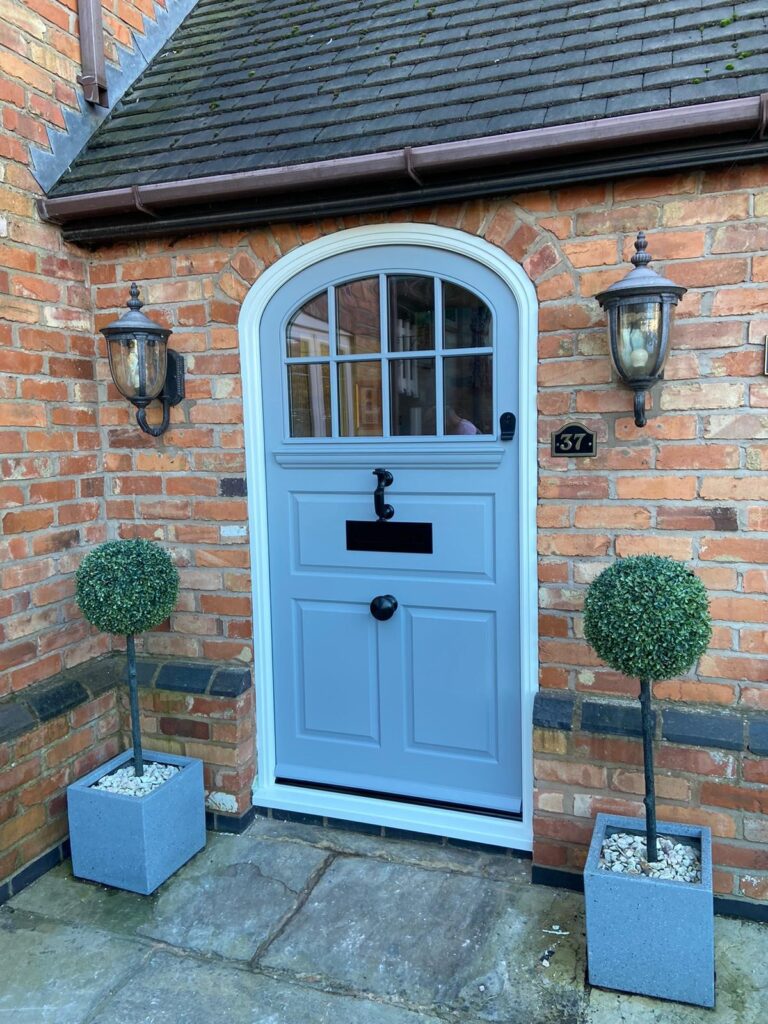
The colour of your front door does more than complement your brickwork or match your window frames. It sends a powerful emotional signal. Whether bold or subtle, colour choices affect how people perceive your home and how you feel when you return to it.
Here’s how to use colour intentionally:
- Natural wood tones: Highlighting the natural grain of Accoya wood offers a timeless, organic feel. These tones suggest warmth, calm and connection to nature, perfect for a welcoming, grounded home.
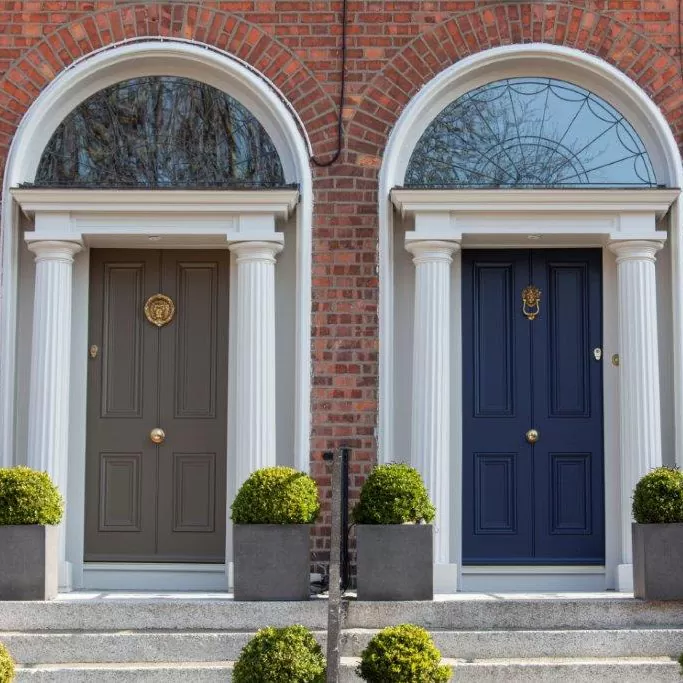
- Deep blues and greens: Colours like navy, sage or forest green often suggest calm, trust and stability. These hues are ideal for traditional homes or anyone wanting to project quiet confidence.
- Bold shades: Red conveys warmth and energy, black suggests elegance and formality, while a yellow door can feel cheerful and creative. Great for standing out and expressing personality.
- Soft neutrals: Understated and modern, these hues can make your home appear serene, thoughtful and timeless.
- White or off-white: Clean, fresh and simple, white evokes purity and openness but can feel colder unless balanced with warm accents.
When choosing your door colour, consider the emotion you want to evoke, the surrounding architecture and how the door’s finish will age over time. Accoya’s superior coating performance means you can choose confidently, the colour will stay vibrant for years to come.
Manufacturer: The Period Door Company
Choosing the right door: A decision that shapes first impressions
Your front door isn’t just the gateway to your home. It’s one of the most defining features of your home’s personality. That’s why choosing the right door isn’t just about size or style, it’s about the impression it makes.
When selecting your door, consider:
- Material: A high-performance wood like Accoya offers beauty, sustainability and long-term durability. A choice that says you value quality and longevity.
- Style: Traditional, contemporary or somewhere in between? Choose a design that reflects your personal style and harmonises with your home’s architecture.
- Colour: Make sure your hue reflects your mood, energy and values.
- Functionality: Think about how your door opens, whether it includes glazing for light or additional features like side panels.
- Safety: Accoya wooden doors support compliance with Building Regulation Part Q for security. Working with UKAS-approved test houses and BWF Federation, Accsys has developed a security global assessment, ensuring doors meet rigorous safety standards for new builds and renovations.
A well-chosen wooden door not only elevates curb appeal but creates an emotional connection with your space. It welcomes, protects and expresses, shaping the experience of home for everyone who walks through it.
Ready to make an entrance?
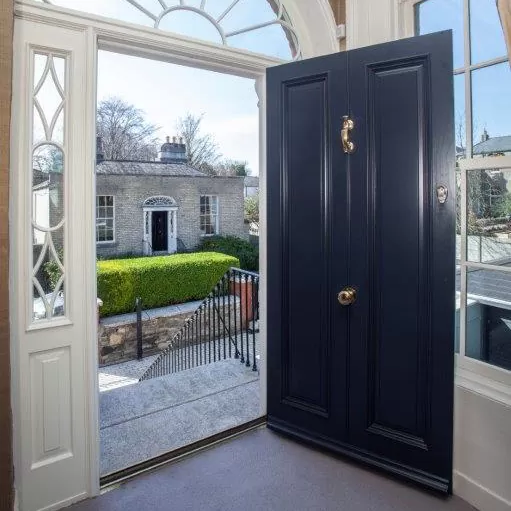
Your front door is more than a feature, it’s a feeling. With Accoya wooden doors, you don’t have to choose between lasting performance and emotional impact. Whether you are drawn to timeless tradition or modern minimalism, the right wooden door can transform the way you, and others, experience your home.
Explore Accoya’s high-performance wooden doors today and find a style that feels just right.
Where to Buy
You can buy Accoya and Accoya products from our selection of distributors or manufacturers in your region. Use our map search tool to find your nearest Accoya supplier.
You are currently on the Accoya site
Would you like to visit the Accoya Site to view all relevant content for your location?